Abstract
The United States(US) prides itself as arguably the oldest democracy in our contemporary world, and undoubtedly the sturdiest; the US flaunts 235 years of unbroken democracy, sixty successful election cycles that defied the Quasi-War (1798-1800), the Second Revolutionary War (1812-1814), the Civil War (1861-1865), World War 1 (1914-1918), World War 2 (1939-1945), the pandemic (2020), and several racial crises. Very often, during their inaugural speeches, presidents of the United States quote copiously from the Declaration of Independence crafted by their Founders in 1776, as a demonstration of their God-given mandate as defenders of government by the people and for the people, freedom, and fundamental human rights around the world. This is a high moral calling that deserves commendation, emulation, and support from younger democracies. However, the reality of America’s democracy falls short of the lofty ideals scripted by its Founders. This paper examines two election cycles, 1968 and 2024, in the US’ long democratic history. It also identifies the niggling issues that continue to bedevil America’s democracy and how they blunt the US’ use of soft power as a diplomatic tool to deepen cooperation among diverse cultures around the world and promote sustainable peace. Finally, this paper attempts to make recommendations to bridge the gap between the lofty ideals of America’s Founders as global defenders of democracy, freedom, and fundamental human rights and the reality of America’s democracy.
Key words: United States of America, Presidential Elections, democracy, 1968, 2024.
Introduction
In 1789, the beginning of America’s democratic experience, 69 electors representing 10 out of 13 states in the Union gathered on February 4, 1789 to elect the President of the United States. The Constitution provided for two votes for each elector, cast for two different candidates. New York was unable to send electors; North Carolina, and Rhode Island did not participate because they were yet to approve and append their signatures on the Constitution at the time. General George Washington was unanimously elected as President, receiving 69 votes, half the votes cast and he has remained the only American president to receive the votes of all the electors. John Adams, US’ ambassador to Great Britain came a distant second with 34 votes. Six other candidates shared the remaining votes cast. The process was entirely wholesome; there were no political parties, and no campaigns. The objective was to elect the best man for the job of leading the US, and President George Washington was the best man; he was a war hero, commander-in-chief of the Continental Army that liberated America, and beloved son of Virginia, the largest state in the US at the time.
However, America’s democracy did not stay wholesome for long. Party politics and its divisive influence began before President Washington completed his second term in 1797. In his Farewell Speech, President Washington warned his compatriots to be vigilant about the corrupting influence of party politics, especially regional parties that pitch one part of the country against the other. In his words: “One of the expedients of party to acquire influence within particular districts is to misrepresent the opinions and aims of other districts. You cannot shield yourself too much against the jealousies and heartburnings which spring from these misrepresentations, they tend to render alien to each other those who ought to be bound together by fraternal affection.” The wise counsel of the retiring elder statesman went unheeded.
The election that produced President John Adams in 1797 was acrimonious, it focused more on personal foibles of the candidates, Vice President John Adams and former Secretary of State Thomas Jefferson. There were very little discussions about policy issues. Since newspaper was the only medium of mass communication at the time, and in keeping with one of the early traditions of American politics, which stipulates that candidates stand for office, rather than run, the job of attacking one’s opponent was taken up by skilled writers and journalists showcasing their wares in newspapers supporting their candidates. Gazette of the United States, for instance, established by John Fenno at the start of America’s democracy in 1789, soon became the official mouthpiece of the Federalist Party, established in 1791 by Secretary of the Treasury, Alexander Hamilton. This was the party that produced John Adams as its presidential candidate in 1796. National Gazette, founded by Philip Freneau in 1791 pitched its tent with Thomas Jefferson, the nominee of the Democratic Republican Party.
Although the parties had marked differences in policy positions on a few issues, for instance, the Federalist Party favoured a strong central government and was pro-British; the Democratic Republican Party favoured stronger states in comparison to the federal government and was pro-French. However, in the campaign of 1796, a lot of effort was expended in denigrating the opponent instead of advancing policy positions on issues. Anonymous writers or writers using pseudonyms directed scathing articles at the opponents of their principals. A mysterious writer called Phocion writing in the Gazette of the United States, alleged that Thomas Jefferson was having an affair with one of his slaves. Thomas Jefferson was also portrayed as a puppet of France and a coward who abandoned his post in the Revolutionary War. Articles in the National Gazette accused John Adams of being a Tory admirer who wants to introduce monarchy to the United States by preparing his son to succeed him.
The election in 1796 witnessed 138 electors, twice the number in the election in 1789. John Adams won a marginal victory with 71 votes, three votes more than his bitter rival, Thomas Jefferson, who though from an opposing party, by the provision of the law at the time, became the Vice President and an awkward inconvenience for the presidency of John Adams. It is important to note that the votes received by the two leading candidates reflected strong geographical loyalties. President John Adams from Massachusetts in the north received nearly all his votes from northern electors; Thomas Jefferson from Virginia in the south, also received nearly all his votes from southern electors. What saved the day for President John Adams were two votes cast by one elector from Virginia and another from North Carolina who disapproved of planter aristocrats like Thomas Jefferson.
Four years later, in 1800, there were more intrigues, more personal attacks, less focus on campaign based on policy issues, as the two friends, turned bitter rivals clashed again. This time, Vice President Thomas Jefferson triumphed, but not after a tie between him and fellow party man Alexander Burr in the first round of voting had necessitated a vote in the House of Representatives. President John Adams came third, having garnered 65 votes, eight votes short of his Democratic Republican opponents and by the provisions of the law, a vote on the floor of the House of Representatives was required to elect the president. It took 36 rounds of voting to select the president. The bad blood generated during this election was so much that after his victory, President Thomas Jefferson pleaded for forgiveness and unity. “Let us, then, fellow-citizens, unite with one heart and one mind. Let us restore to social intercourse that harmony and affection without which liberty and even life itself are but dreary things. We are all Republicans, we are all Federalists,” the president reiterated in his first inaugural speech. The difficulties encountered during this election cycle also led to the passing into law of the 12th Amendment, which ensured that votes in subsequent elections were cast separately for the president and the vice president.
The seeds of politics of bitterness planted in the late 18th century and early 19th century birthed today’s abrasive and pervasive Trumpian politics that is threatening to derail America’s democracy and corrupt younger and struggling democracies around the world. Fifty-six elections have been conducted since the hate-filled campaigns that produced Thomas Jefferson as President of the United States in 1800. Forty campaign seasons focused on policies and were rancor free. Sixteen elections focused on personal attacks. These numbers do not tell the stories of intrigues, subterfuge, coercion, attempted assassinations and homicides that dotted these otherwise “peaceful change of government.” For instance, former President Theodore Roosevelt cheated death on October 14, 1912, because a bullet fired at his heart, while he was on campaign rounds, struck a fifty-page speech note in his breast pocket. Senator Huey Long, a former governor of Louisiana was not so fortunate. At the height of his political power, when American voters were warming up to his alternative campaign message of “Share the Wealth,” that challenged President Franklin Roosevelt’s jaded “New Deal,” he was shot on September 8, 1935. He died two days later; his dying words were: “God, don’t let me die. I have so much to do.” He did not live long enough to test his popularity against the inimitable Franklin Roosevelt.
America’s democracy endured lots of violence in the past, but there is relative decorum since the introduction of televised presidential election debates in 1956, although it must be mentioned that former First Lady Eleanor Roosevelt refused to shake hands with Senator Margaret Chase Smith when they faced each other on behalf of their principals, because Senator Chase, being the underdog, leaned heavily on her closing remark, much to the dislike of the polished niece of President Theodore Roosevelt. The entrance of President Trump into American politics has widened the fissures within its democratic process and introduced fresh adverse elements. Noteworthy is the fact that all three elections in which President Donald Trump participated have been marked by hate-filled campaigns. If the custodians of America’s democratic institutions do not initiate a bipartisan platform to heal the breaches exploited by President Trump, America’s democracy may be confronted with existential threats, or may be eroded considerably in a manner that leaves a sorry version of what the Founders intended, which many American presidents proudly advertise to the world. If America’s democracy is to be made wholesome again, like obtained between 1972 and 2012, it is important to identify ancient yet extant and persistent ills plaguing the system as well as fresh threats. In order to achieve this, this paper will attempt a comparison of the election in 1968, and the recent election in 2024.
1968 and 2024 Presidential Elections
Both elections occurred on Tuesday, November 5 in the respective years. In 1845, an Act of the Twenty-Eighth Congress, endorsed by President John Tyler, stated that: “the electors of President and Vice President shall be appointed in each State on the Tuesday next after the first Monday in the month of November of the year in which they are to be appointed.” This law set the tradition which began in 1848 Presidential Election and has endured till date. Also both elections recorded novelties; the election in 1968 was the first time an incumbent vice president would confront a former vice president as Hubert Humphrey of the Democratic Party faced Republican Party candidate, Richard Nixon.
In 2024, for some time, one former President of the US sat on the opposite side of the podium against the incumbent President of the US. In the words of moderator, Jake Tapper of CNN: “In just moments, the current U.S. president will debate the former U.S. president as their parties’ presumptive nominees, a first in American history.” However, of greater concern is the fact that both elections took place in an ambience of conflict, threat to lives and utter trepidation.
In 1968, the war in Vietnam played a major role in the outcome of the election, as the conflict sapped the finances of government and impacted negatively on the ability of President Lyndon Johnson led government to implement social welfare packages. Americans protested in many cities as the economy floundered because of galloping inflation and American death toll rose sharply in Hanoi. The unpopularity of the Vietnam war and harsh criticism from within his party and among Americans compelled President Johnson to pull out of the race for reelection on March 31, 1968. In 2024, President Joe Biden was compelled to withdraw from the race for reelection after an abysmal performance in the first debate caused many within his party and among Americans to doubt his mental capacity to carry on the task of leading the country beyond his first term.
In 2024, although officially there were no American boots in neither the war between Russia and Ukraine; nor in the war between Israel and several armed groups in the Middle East, these wars stretched the finances of US government. Council on Foreign Relation reports put US’ aid to Ukraine since the start of the war on February 24, 2022 at $175 billion and $17.9 billion to Israel since October 7, 2023, the day of Hamas invasion of Israel. A few Americans have voiced their opposition to the US’ continued financial support for Ukraine; and many Americans have protested and clashed with law enforcement agents in different American cities over what they describe as US’ support for Israel’s genocidal war in Gaza. In 1968, stopping the war in Vietnam and checking spiraling inflation were priorities; in 2024, cutting US’ aid to Israel to end the war in Gaza and slowing down inflation to keep the prices of goods and services within reach ranked high among the priorities of American voters.
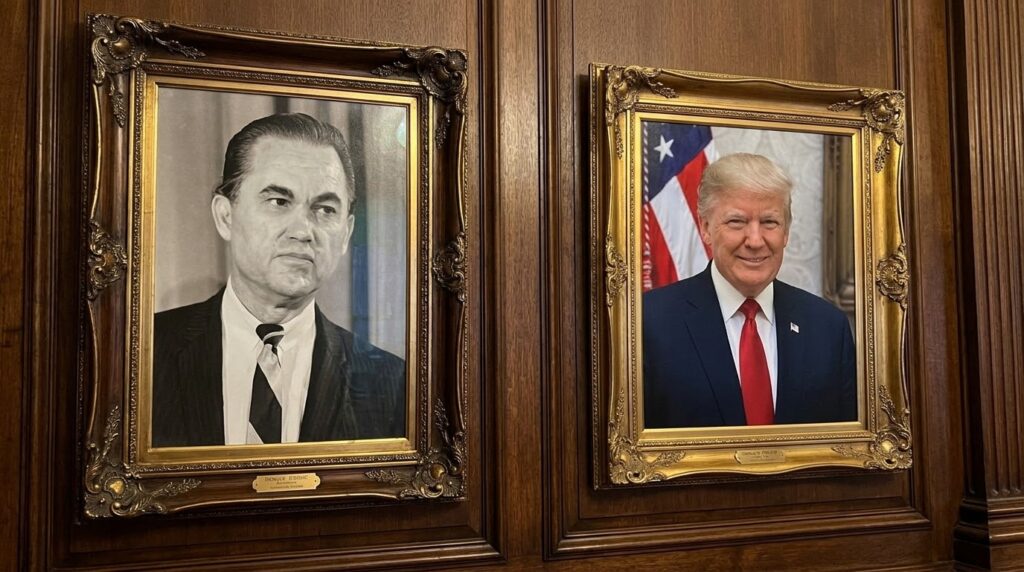
Also, in 1968, ending racial discrimination against African Americans in the midst of protests and racial violence by pro and anti-segregation groups that trailed the passing of the Civil Rights Act of 1964 was another priority for American voters; as a result, “law and order,” the campaign mantra of pro segregation and independent candidate, George Wallace, a former governor of Alabama, became a rallying point for many white Americans. In 2024, checking immigration and securing the United States’ southern borders ranked high among priorities for American voters; however, concerns about maintaining racial supremacy, restoring “traditional values” and other race-related sentiments also played a part in determining the choice of many voters. In 1968, George Wallace superintended emotive politics over policies and was perceived by his supporters as a strong leader who would make America safe again; a fighter who would stand up to Washington and restore traditional American values; and George Wallace was characterized by some of his supporters in biblical terms, one supporter in Pennsylvania referred to George Wallace as “a new Messiah.”
In 1968, George Wallace had many Americans riveted to his campaign with the catch phrase “Stand Up for America.” In 2024 like in 2016, President Donald Trump dazzled Americans with “Make America Great Again.” Trump is also viewed in messianic hue by his supporters and he sold copies of “God Bless the USA Bible” to boost his campaign and “Make America Pray Again.” Also, like Wallace in 1968, Trump is looked upon by his supporters as a strong leader capable of keeping America safe, and ending wars in the Middle East and between Russia and Ukraine; a fighter who would stand up to special interests in Washington and restore the government to the people as well as restore traditional American values; and like Wallace, Trump favours emotive politics over policy discussions.
Trump mirrors Wallace to the delight of a large fanatical followership in America and conservative elements in the Republican Party, but to the hurt of America’ democracy and values which the US project to the world. On his campaign round on October 24, 1968, George Wallace addressed a rally with these words: “Our system is under attack: the property system, the free enterprise system, and local government. Anarchy prevails today in the streets of the large cities in our country, making it unsafe for you to even go to a political rally here in Madison Square Garden, and that is a sad commentary. —. The American people are not going to stand by and see the security of our nation imperiled, and they’re not going to stand by and see this nation destroyed, I can assure you that. —-. You had better be thankful for the police and the firemen of this country. If it were not for them, you couldn’t even ride in the streets, much less walk in the streets, of our large cities.” In 2024, at a campaign rally in Las Vegas, President Donald Trump addressed supporters with these words: “Of course I’m angry. We got 21 million people that came into our country, invading our communities, invading our cities and our towns, and destroying our country. I’m angry about Venezuelan gangs taking over Aurora, Colorado, and I’m angry about illegal Haitian migrants taking over Springfield, Ohio. —-. They are taking over our country from within, can you believe?”
If President Trump’s abrasive and high octane, emotive rhetoric which seeks to emasculate and project the opponent as an ineffectual moron, is deployed only as a means to the end of gaining access to the presidency, that will be perhaps more tolerable and less damaging to America’s democracy; however, the combative and divisive rhetoric that disavow plurality of opinion, and denigrate dissenting voices is what defines Trumpian or Trumpism as some scholars refer to President Trump’s brand of politics and is expressed in the policies and utterances of Trump as President of the United States. Where a President Thomas Jefferson expressed remorse after a hate-filled campaign in 1800 and called for forgiveness, and unity among Americans in his first inaugural speech; President Trump remained combative and derisive of his opponents even in victory; although President Trump’s approach is attractive to his fanatical fan base, it is inimical to the wellbeing of America’s democracy and its projection as a tool of US’ soft power.
Conclusion
Since inception, the written ideals of America’s democracy crafted by the Founders in the Declaration of Independence which states inter alia: “We hold these truths to be self-evident, that all men are created equal; that they are endowed by their Creator with certain inalienable rights; that among these are life, liberty, and the pursuit of happiness,” stand in sharp contrast to America’s long history of slavery, segregation, gender and racial discrimination and violence. In spite of the relentless efforts made by many American leaders, some of them like President Abraham Lincoln paid the supreme price for their belief and struggle to actualise the wishes expressed by their Founders, and the tremendous progress made as a result, many American leaders still clamour for lost privileges and restoration of traditional values, such as the one that defined an American as a white, male, Christian and property owner. In a recent interview, President Trump, pledged to end automatic citizenship for children born in the United States, saying: “We have to end it. It’s ridiculous.” If President Trump is successful in implementing his threat, it would perhaps take the United States back to the time in 1857 when the United States Supreme Court ruled that Dred Scott, an African American, though born in the United States, did not qualify as a citizen because of his colour.
This retrogressive policy if implemented, would be contrary to the vision of America’s democracy which is proudly celebrated every four years by American presidents. President Barack Obama in his second inaugural address declared: “Each time we gather to inaugurate a President we bear witness to the enduring strength of our Constitution. We affirm the promise of our democracy. We recall that what binds this nation together is not the colours of our skin or the tenets of our faith or the origins of our names.” President George W. Bush, a Republican, agrees with President Obama, in his second inaugural speech he affirms: “From the day of our Founding, we have proclaimed that every man and woman on this earth has rights, and dignity, and matchless value, because they bear the image of the Maker of Heaven and earth. Across the generations we have proclaimed the imperative of self-government, because no one is fit to be a master, and no one deserves to be a slave. Advancing these ideals is the mission that created our Nation.” Even President Trump echoed these sentiments in his inaugural address in 2017: “It’s time to remember that old wisdom our soldiers will never forget, that whether we are black or brown or white, we all bleed the same red blood of patriots. We all enjoy the same glorious freedoms, and we all salute the same, great American flag. And whether a child is born in the urban sprawl of Detroit or the windswept plain of Nebraska, they look up to the same night sky, they fill their hearts with the same dreams and they are infused with the same breath of life by the same almighty creator.” Indeed, these are graceful words that express the high moral values of America’s democracy, but President Trump’s hate-filled and racial utterances and policies betray him.
Some may argue that America’s democracy is founded on hypocritical footing, after all, Thomas Jefferson, the man credited with crafting the Declaration of Independence that expressed such lofty ideals kept a coffle of slaves. A counter argument is the fact that time and season determine right and wrong; slavery, segregation, like dueling which claimed notable scalps including US’ first Secretary of the Treasury and founder of the Federalist Party, Alexander Hamilton, was right and acceptable in seasons gone by. The US, the acclaimed leader of global democracy turned the page, but some politicians like President Trump are still holding on to the soiled, moth eaten garment of patrician, racial supremacy that is espoused as conservatism.
An article written by Wendy Shaia, associate professor at the University of Maryland School of Social Work cites FBI report released in 2023 which showed a rise in hate crimes in 2022, and hate crimes against blacks were three times more than any ethnic group. The FBI report also showed a steady increase in hate crimes in ten of US’ biggest cities for three consecutive years, 2020-2022. Professor Shaia also cited a report by Civil Rights protection organization, the Southern Poverty Law Center for 2023 which reported that there is an all-time high number of white supremacist groups, 165 functioning hate groups in the US. Some may argue that there is no direct correlation between the surge in hate crimes, particularly anti-black hate crimes, surge in white supremacist groups and President Trump; an examination of his utterances, actions and policies will establish the link. A typical example can be found in the utterances of President Trump in the aftermath of the 2020 presidential election and the identities of the groups that led the insurrection on the Capitol on January 6, 2021.
Race-baiting rhetoric increases the opportunities for violence in an otherwise peaceful process. In April 1968, leading Civil Rights activist and African American, Martin Luther King Jr., was assassinated, causing widespread protests and violence in many American cities; a few months later, in June 1968, Robert Kennedy a leading candidate for the Democratic Party presidential ticket and strong supporter of the Civil Rights Act, was assassinated. Four years later, in 1972, during a campaign rally, George Wallace escaped an attempt on his life with mortal wounds. In 2024, President Trump escaped two assassination attempts. In the buildup to Election Day on November 5, 2024, the National Guard was put on high alert in many states because of threats of violence from extremist groups who alleged there were plans to rob their candidate of victory. This unfounded allegation stems from the media statements of President Trump. It is safe to say that President Trump’s victory saved America’s democracy from descending into violence like was witnessed in 2021.
Since the advent of televised presidential debates in 1956, American leaders have done their best to use the platform to sell the US’ brand of democracy to the world. The debates have been decent, orderly and courteous, with the candidates extending outmost respect and warmth to their opponent. Although there were no presidential debates after 1960 round of debates between John Kennedy and then Vice President Richard Nixon, until 1976, the year of the bicentennial anniversary of US’ independence, there has been presidential debate every four years since 1976, even in 2020, the year of the dreaded pandemic. Over the years, US’ presidential election debates have become a staple for lovers of democracy around the world to feel the pulse of the nation, and gauge the direction America is heading on domestic and foreign policies.
Ten presidential debates, between 1976 and 2012 have been great advertisement for America’s democracy; these debates demonstrated the true essence of America’s brand of democracy, the centrality of the people in a democracy as the ultimate beneficiaries of government policies; the imperative for the candidates to demonstrate to the people, particularly during the town hall debates, that they have adequate grasp of the issues and solutions for the problems confronting the US as well as the competence and character to execute the proposed programs; and a spirit of sportsmanship that accommodates and extends a hand of fellowship to the opponent. All that changed in 2016 when President Trump entered the race for the presidency.
On October 9, 2016, during a town hall debate between President Trump and former Secretary of State, Hillary Clinton, a participant from the audience selected by Gallup Organization and described as “non-committed to a candidate,” posed this question: “Thank you, and good evening. The last presidential debate was rated as MA, mature audiences, per TV parental guidelines. Knowing that educators assign viewing the presidential debates as students’ homework, do you feel you are modeling appropriate and positive behaviour for today’s youth?”
A study of the video or transcript of the first presidential debate on September 26, 2016 will reveal which of the candidates is responsible for this damning verdict; however, more revealing is the answer of the candidates to the question. Hilary Clinton was given the chance to first respond: “Well, thank you. Are you a teacher? Yes, I think that that’s a very good question, because I’ve heard from lots of teachers and parents about some of their concerns about some of the things that are being said and done in this campaign. And I think it is very important to make clear to our children that our country really is great because we’re good. And we are going to respect one another, lift each other up. We are going to be looking for ways to celebrate our diversity, and we are going to try to reach out to every boy and girl, as well as every adult, to bring them in to working on behalf of our country.”
Here is the response of President Trump: “Well, I actually agree with that. I agree with everything she said. I began this campaign because I was so tired of seeing such foolish things happen to our country. This is a great country. This is a great land. I’ve gotten to know the people of the country over the last year-and-a-half that I’ve been doing this as a politician. I cannot believe I’m saying that about myself, but I guess I have been a politician.” President Trump in the rest of his response did not mention the need to adopt better behaviour or address the concerns expressed by the participant. In fact, the candidates only shook hands and exchanged pleasantries before the first debate and afterwards they barely acknowledged each other in the second and third debates. This set the mood for the rabid debates of 2020 and 2024.
In 2020, the were only two presidential debates; during the first presidential debate which took place on September 29, an exasperated President Biden, unable to condone the rude and persistent injections from Trump, blurted out: “Donald would you just be quiet for a minute.” Later, in the course of the same debate-turned shouting match, the moderator, Chris Wallace of Fox News reminded Trump: “Mr. President, I’m the moderator of this debate and I would like you to let me ask my question and then you can answer.” The admonition had no effect on President Trump, so the rules for the debate were altered in the second debate on October 22, 2020. The moderator, Kristen Welker of NBC News stated: “At the beginning of each section, each candidate will have two minutes, uninterrupted, to answer my first question. The debate commission will then turn on their microphone only when it is their turn to answer, and the commission will turn it off exactly when the two minutes have expired. After that, both microphones will remain on, but on behalf of the voters, I’m going to ask you to please speak one at a time. The goal is for you to hear each other and for the American people to hear every word of what you both have to say.” The doyen of many presidential debates in America, Jim Lehrer, and Barbara Walters before him, would never think that a day would come when moderators would read out such rules to candidates contesting to lead America!
The most effective way for the US to continue to deploy its democracy as a tool of soft power, to continue to engage and get other countries around the world to enroll into America’ brand of democracy is by keeping the process of its democracy attractive and seductive, such as obtained between 1972-2012. This is what Joseph Nye, the proponent of the concept of soft power as a tool for public diplomacy recommends and it is valid. Also the democratic process must be credible and transparent in showcasing the vital soft power resources of the country, namely; its culture, the unique inclusivity of diverse cultures that defines the American dream and creed, the type described by President Obama in his first inaugural speech: “This is the meaning of our liberty and our creed, why men and children of every race and every faith can join in celebration across this magnificent mall; and why a man whose father less than 60 years ago might not have been served in a local restaurant can now stand before you to take the most sacred oath.” The political values of the US as expressed in the Declaration for Independence: “that governments are instituted among men, deriving their just powers from the consent of the governed,” these words are endorsed every four years by American presidents, and the presidential debates offer opportunity for them to recount their achievements, admit their failures and show American people their plans; and the US’ foreign policies which consistently have been to defend freedom around the world, support minority groups and promote democracy, the type expressed by President George H. W. Bush in his first inaugural speech as the communist republics in Eastern Europe embraced democracy: “Great nations of the world are moving towards democracy through the door of freedom. Men and women of the world move toward free markets through the door of prosperity. The people of the world agitate for free expression and free thought through the door to the moral and intellectual satisfactions that only liberty allows.”
Also, the grey areas that allow millionaires, billionaires, and special interest groups to invest in US presidential candidates should be addressed by a bipartisan committee. In 1996, when President Bill Clinton faced his opponent Senator Bob Dole, moderator Jim Lehrer posed this question to President Clinton: “Mr. President, the Senator mentioned trial lawyers and campaign, that means campaign financing. How do you personally avoid being unduly influenced by people who give you money or give you services in your campaigns?” Businessmen invest in politicians and presidential candidates for different reasons but it is hardly ever about serving the interest of the people, which is what presidents are elected to do. In 1896, Marcus Alonzo Hanna, a businessman enrolled his business associates to pour money into the campaign coffers of Republican Party candidate William McKinley who was involved in a tight race for the White House with young and brilliant William Bryan of the Democratic Party. On Election Day, William McKinley was elected president, and quickly went on to appoint Senator John Sherman as Secretary of State; the vacancy created in the Senate was filled by Marcus Hanna. In 2024 it is businessman and government contractor, Elon Musk who threw his considerable financial muscle behind President Trump’s reelection bid and engaged in some promotional activities that bordered on vote buying. Elon Musk has since been appointed as head of government efficiency department. How much influence Elon Musk would wade in President Trump’s administration and its impact on America’s democracy remain to be seen. However, if early signs are anything to go by, the coming days require that all the democratic institutions in the US stay vigilant, particularly the press to report and challenge any infringement on the peoples’ rights.
The US has strong democratic institutions, those institutions survived President Trump’s first term, hopefully, they can withstand his second term. America’s democracy has persisted against many odds; it will persist after President Trump’s second term. In the words of President Bill Clinton: “There is nothing wrong with America that cannot be cured by what is right with America.” In the coming years, as the US inch towards another election in 2028, it is important that there is a bipartisan meeting to renew the pledge to make America’s democracy “the envy of the world,” by jettisoning divisive and hate-filled politics, the type favoured by President Trump and euphemized as conservatism. American leaders across both parties will do well to recall the words of President George H. W. Bush that: “America is never wholly herself unless she is engaged in high moral principle.”
Finally, it is hoped that political leaders in America can return America’s democracy to a time when a presidential candidate, though eminently qualified, and well supported, after losing an election too close to call, like it happened in 2000, can say to Americans: “for the sake of our unity of the people and the strength of our democracy, I offer my concession;” a time when a presidential candidate, confronted by a question meant to discomfit, can deploy wit to turn the table on the moderator and draw laughter from everyone including his opponent, like President Reagan did in a presidential debate in 1988 when he was questioned about his age (73), he quipped charmingly: “I want you to know that also I will not make age an issue of this campaign. I am not going to exploit for political purposes my opponent’s youth and inexperience.” That was the America that seduced the world with its brand of democracy. That was the America that demanded that the Berlin Wall be pulled down. American leaders across the Democratic and Republican Party must recommit to “such a purpose” again.
References
“Acts of the Twenty-Eighth Congress of the United States.” Accessed: December 10, 2024.
Acts of the Twenty-Eighth Congress of the United States
ALJAZEERA. 2024. “Pro-Palestinian protesters clash with US police on second night of DNC.” August 21. Accessed: December 15.
Pro-Palestinian protesters clash with US police on second night of DNC | Protests News | Al Jazeera
(ALJAZEERA 2024)
August, Melissa. 2023. “The First Televised Presidential Debate Isn’t What You Think It Was.” Time. August 23. Accessed: December 10, 2024.
The Real History of the First Televised Presidential Debate | TIME
Beauchamp, Zack. 2024. “Did Trump win in 2024 because of racism? It’s complicated.” Vox. November 14. Accessed: December 14.
Was Trump’s 2024 election win because of racism? It’s complicated. | Vox
Brennen, Megan. 2024. “Economy Most Important Issue to 2024 Presidential Vote.” GALLUP. October 9. Accessed: December 15.
Economy Most Important Issue to 2024 Presidential Vote
Brieg, James. 2002. “Early American Newspapering.” Colonial Williamsburg. Accessed: December 8.
#variables.PageTitle# | The Colonial Williamsburg Official History & Citizenship Site
Britannica. 2024. “Civil Rights Act 1964.” December 4. Accessed: December 9.
Civil Rights Act | Summary, Facts, President, & History | Britannica
(Britannica 2024)
Britannica Money. 2024. “Mark Hanna.” Accessed: December 10.
Mark Hanna | Oil Tycoon, Business Magnate, Financier | Britannica Money
(Britannica 2024)
Britannica. 2024. “John Fenno.” Accessed: December 8.
John Fenno | Federalist Party, Gazette of the U.S., Editor | Britannica
(Britannica 2024)
Britannica. 2024. “The Federalist Party.” Accessed December 8.
Federalist Party | Definition, History, Beliefs, & Facts | Britannica
(Britannica 2024)
Britannica. 2024. “United States Presidential Election 1800.” October 28. Accessed: December 8.
United States presidential election of 1800 | Candidates, Significance, & Results | Britannica
(Britannica 2024)
Britannica. 2024. “United States Presidential Election 1896.” October 27. Accessed: December 8.
(Britannica 2024)
Britannica. 2024. “United States Presidential Election 1968.” October 29. Accessed: December 8.
(Britannica 2024)
Britannica. 2024. “United States Presidential Election 1984.” October 28. Accessed: December 12.
(Britannica 2024)
Britannica. 2024. “United States Presidential Election 2020.” October 28. Accessed: December 8.
U.S. presidential election of 2020 | Trump vs. Biden, Results, & Aftermath | Britannica
(Britannica 2024)
Browne H. Stephen. 2024. “Presidential Election of 1789.” George Washington’s Mount Vernon. Accessed: Accessed December 8.
Presidential Election of 1789 | George Washington’s Mount Vernon
Bulla W. David. 2024. “The Press Era: United States History.” Britannica. Accessed: December 8.
Party press era | US Politics & Media in the 1800s | Britannica
Cavendish, Richard. 2008. “The Assassination of Robert Kennedy.” History Today Volume 58, Issue 6. Accessed: December 9, 2024.
The Assassination of Robert Kennedy | History Today
CNN. 2024. “Read: Biden-Trump Debate Transcript.” CNN Presidential Debate. June 28. Accessed: December 10.
Collin, A. et al. 1996. “October 6, 1996 Transcript.” The Commission on Presidential Debates. Accessed: December 10, 2024.
CPD: October 6, 1996 Debate Transcript
Colvin, Jill. 2024. “Trump is selling ‘God Bless the USA’ Bibles for $59.99 as he faces mounting legal bills.” The Associated Press. March 26. Accessed: December 13.
Donald Trump is selling Bibles for $59.99 as he faces mounting legal bills | AP News
Ellis J. Joseph. 2024. “Thomas Jefferson 3rd President of the United States.” Britannica. December 9. Accessed: December 12.
Thomas Jefferson | Biography, Political Career, Slavery, & Facts | Britannica
Goldman, Lillian. 2008. “First Inaugural Address of William J. Clinton.” The Avalon Project. Accessed: December 8, 2024.
The Avalon Project : First Inaugural Address of William J. Clinton
Goldman, Lillian. 2008. “Inaugural Address of Address of George Bush.” The Avalon Project. Accessed: December 10.
The Avalon Project : Inaugural Address of George Bush
Goldman, Lillian. 2008. “Thomas Jefferson First Inaugural Address.” The Avalon Project. Accessed: December 8.
The Avalon Project : Jefferson’s First Inaugural Address
Goldman, Lillian. 2008. “Washington’s Farewell Address 1796.” The Avalon Project. Accessed: December 8, 2024.
Avalon Project – Washington’s Farewell Address 1796
Greider, William. 1972. “Wallace Is Shot, Legs Paralyzed, Suspect Seized at Laurel Rally.” Washington Post. May 16. Accessed: December 12, 2024.
Washingtonpost.com: George Wallace Remembered
Klein, Christopher. 2024. “When Teddy Roosevelt was shot in 1912, a Speech may have saved his life.” History. July 15. Accessed: December 9.
When Teddy Roosevelt Was Shot in 1912, a Speech May Have Saved His Life | HISTORY
Levy, Michael. 2024. “United States Presidential Election of 1936.” Britannica. October 27. Accessed: December 9.
U.S. presidential election of 1936 | FDR vs. Alf Landon, Campaigns, Results, & Facts | Britannica
Levy, Michael. 2024. “United States Presidential Election of 1948.” Britannica. October 26. Accessed: December 9.
Lindenbaum, Jacob. 2024. “National Gazette.” George Washington’s Mount Vernon. Accessed: December 8.
National Gazette | George Washington’s Mount Vernon
LSU Libraries Special Collections. 2024. “Huey Long: The Man, His Mission, And Legacy.” Accessed: December 9.
(LSU Libraries Collections 2024)
Huey Long’s Assassination – Who Killed Huey Long
Lyman, Brian. 2024. George Wallace: A Segregationist stand for America. USA Network Today. Accessed: December 13.
Stand Up For America: George Wallace’s chaotic, prophetic campaign
Masters, Jonathan and Merrow, Will. 2024. “How Much U.S. Aid Is Going to Ukraine?” Council on Foreign Relations. November 13. Accessed: December 14.
How Much U.S. Aid Is Going to Ukraine? | Council on Foreign Relations
Masters, Jonathan and Merrow, Will. 2024. “U.S. Aid to Israel in Four Charts.” Council on Foreign Relations. November 13. Accessed: December 14.
U.S. Aid to Israel in Four Charts | Council on Foreign Relations
Mitchell, Robert. 2024. “The first televised U.S. presidential election debate was between two women.” Washington Post. June 27. Accessed: December 10.
The first televised U.S. presidential debate was between two women – The Washington Post
NBC NEWS. 2024. “2024 Delegate Tracker and Primary Election Results.” October 12. Accessed: December 15.
Presidential Primary Delegate Tracker 2024: Vote Counts by State
(NBC NEWS 2024)
NEWS WIRES. 2024. “protests as tensions over Gaza war simmer.” France 24. May 1. Accessed: December 15.
Police crack down on US campus protests as tensions over Gaza war simmer
Nye, Joseph S. 2010. “Public Diplomacy and Soft Power.” The Annals of the American Academy of Political and Social Science. November 14.
(Nye 2010 616/1/94)
Phillips, Macon. 2009. “Barack Obama’s Inaugural Address.” White House Archives. January 21. Accessed: December 14, 2024.
President Barack Obama’s Inaugural Address | whitehouse.gov
Perry-Giles, J. Shawn. 1968. “LYNDON BAINES JOHNSON ‘WITHDRAWAL SPEECH’.” Voices of Democracy The US Oratory Project. Accessed: December 15, 2024.
Lyndon Baines Johnson, “Withdrawl Speech” (March 31, 1968) – Voices of Democracy
Perry-Giles, J. Shawn. 2005. “George W. Bush, ‘SECOND INAUGURAL ADDRESS’.” Voices of Democracy The US Oratory Project. Accessed: December 15, 2024.
Bush, “Second Inaugural…,” Speech Text – Voices of Democracy
Pew Research Center. 2024. “Issues and the 2024 election.” September 9. Accessed: December 14.
Issues and the 2024 election | Pew Research Center
(Pew Research Center 2024)
Rev. 2024. “Trump Rally in Las Vegas.” Accessed: December 13.
(Rev 2024)
Richard, Gill. 1968. “LBJ and the Cause of Inflation.” economics USA. Accessed: December 12, 2024.
Richard Nixon Presidential Library and Museum. 1968. “Richard Nixon 1968 Presidential Campaign – 50th Anniversary.” Accessed: December 14, 2024.
Richard Nixon 1968 Presidential Campaign – 50th Anniversary | Richard Nixon Museum and Library
(Richard Nixon Presidential Library and Museum 1968)
Rose, Gideon. 2023. “How Today Is Like the 1890s.” Council on Foreign Relations. July 16. Accessed: December 12.
How Today Is Like the 1890s | Council on Foreign Relations
Roy, Diana. 2024. “What’s at Stake for Foreign Policy in the 2024 Elections.” Council on Foreign Relations. October 30. Accessed: December 15.
What’s at Stake for Foreign Policy in the 2024 Elections | Council on Foreign Relations
Sands C. Eric. 1968. “Speech at Madison Square by George Wallace.” Teaching American History. October 24. Accessed: December 13, 2024.
Speech at Madison Square Garden | Teaching American History
Shaia, Wendy. 2024. “What This Election Is Teaching Us About Racism.” The Elm. July 29. Accessed: December 14.
What This Election Is Teaching Us About Racism – The Elm
Sheerin, Jude. 2024. “Trump vows to end birthright citizenship and pardon US Capitol rioters.” BBC News. December 9. Accessed: December 12.
Trump vows end to birthright citizenship and pardon US Capitol rioters – BBC News
Singh, Kanishk. 2025. Activists protest US support for Israel as risks rise of wider Middle East war. Reuters. September 25. Accessed: December 14.
Activists protest US support for Israel as risks rise of wider Middle East war | Reuters
Siyech S. Mohammed and Narain, Akanksh. 2024. “How the Gaza conflict influenced Trump’s victory.” Observer Research Foundation. December 7. Accessed: December 14.
How the Gaza conflict influenced Trump’s victory
Stump & Associates. 2024. “The history of being ‘American’.” Accessed: December 12.
The history of being ‘American’ – Stump & Associates
(Stump & Associates 2024)
Taylor C. James. 2024. “John Adams: Campaigns and Elections.” UVA Miller Center. Accessed December 8.
John Adams: Campaigns and Elections | Miller Center
The American Presidency Project. 2017. “Donald J. Trump Inaugural Address.” Accessed: December 10, 2024.
Inaugural Address | The American Presidency Project
(The American Presidency Project 2017)
The Bill of Rights Institute. 1968. “The Election of 1968.” Accessed: December 15, 2024.
(The Bill of Rights Institute 1968)
The Commission on Presidential Debates. 2016. “October 9, 2016 Debate Transcript.” Accessed: December 10, 2024.
CPD: October 9, 2016 Debate Transcript
(The Commission on Presidential Debates 2016)
The Commission on Presidential Debates. 2020. “September 29, 2020 Debate Transcript.” Accessed: December 10, 2024.
CPD: September 29, 2020 Debate Transcript
(The Commission on Presidential Debates 2020)
The Commission on Presidential Debates. 2020. “October 22, 2020 Debate Transcript.” Accessed: December 10, 2024.
CPD: October 22, 2020 Debate Transcript
(The Commission on Presidential Debates 2020)
The White House. 2013. “Inaugural Address by President Barack Obama.” January 21. Accessed: December 15.
Inaugural Address by President Barack Obama | whitehouse.gov
(White House 2013)
U.S. History. 2008. “The Election of 1800.” Accessed: December 8.
The Election of 1800 [ushistory.org]
(U.S. History 2008)
Wallenfeldt, Jeff. 2024. “Assassination of Martin Luther King Jr.” Britannica. October 23. Accessed: December 9.
Assassination of Martin Luther King, Jr. | History & Facts | Britannica
Wentling, Nikki. 2024. “States put National Guard on Standby in case of election violence.” Military Times. November 5. Accessed: December 10, 2024.
States put National Guard on standby in case of election violence
Woolley, John and Peters, Gerhard. 2000. “Address Conceding the 2000 Presidential Election.” The American Presidency Project. Accessed: December 14, 2024
Address Conceding the 2000 Presidential Election | The American Presidency Project
This Publication was written November, 2024