Historical Background
Russia’s invasion of Ukraine breaches international norms and laws. Specifically, Article 2 (4) of the United Nations (UN) Charter forbids member states from using military force against the territories or political independence of any state (UN Charter, 1945). Also, United Nations General Assembly (UNGA) Resolution 2625 states that territories acquired through the use of force or threat shall not be recognized (UN Document, 1970). Expectedly, the EU and its Western allies sanctioned and isolated Russia.
In February 2026, a final group paper submitted for IR 505, International Relations & Diplomacy Workshop with Professor Lachapelle on the future of Russia by this researcher and other course mates showed that Russia’s economy was on life support (Leung et al., 2026). The cause of Russia’s bleak future was the debilitating effect of sustained sanction packages by Washington and its allies in Brussels and London. Two years after Russia’s invasion of Ukraine which Putin termed “special military operation,” the Central-Asia – Caucasus Institute published the forecasts of 26 experts on the future of Russia and 24 of them painted a bleak future for Russia due to the crippling effects of Western sanctions on Russia’s economy; the human toll on Russia’s aging and diminishing population; and the brain drain due to increased censorship and lack of opportunities in Moscow (Starr, 2024; Krawatzek and Sasse, 2024; The Kremlin, 2022). That was before the US launched aerial attacks on Iran on February 28, 2026.
Timeline of US Conflict with Iran
The conflict between the US and Iran began in 1953, when a Central Intelligence Agency (CIA) -backed coup overthrew the elected Prime Minister of Iran, Mohammad Mossadegh (Wu and Lanz, 2019). British economic interests concerning control of Iranian oil, which Mossadegh nationalized, prompted London to enlist the support of Washington to use covert means to destabilize Iranian politics by restoring Mohammad Reza Pahlavi to the throne of Shah of Iran. In 1957, Shah Pahlavi keyed into Eisenhower’s Atoms for Peace program, and with the support of US allies, America donated a nuclear reactor and uranium to Iran (Al Jazeera Staff, 2025). This was the beginning of Iran’s contested nuclear program.
The Harbinger of Conflict
In 1979, after over 25 years of the reign of Shah Pahlavi, the Iranian Revolution led by militant Iranian students occurred; the Shah was ousted, and Islamic scholar Ruhollah Khomeini returned from exile to rule the conservative Islamic state (Ashraf and Banuazizi, 1985). Later in 1979, militant Iranian students kidnapped 52 Americans from the US embassy in Tehran and held them hostage for more than one year (McDermott, 1992). The instigator of this conflict was the admission of the exiled Shah Pahlavi to a US hospital (Gwertzman, 1979). Subsequently, the US severed ties and imposed sanctions on Iran. The relationship between the two countries further deteriorated throughout the 1980s. Reagan called Iran a state sponsor of terror (Weinraub, 1985). In 1988, there was armed confrontation between the military of both nations, and a US naval warship shot down Tehran’s civilian plane, killing all 290 passengers on board. US paid compensation to the families of the victims but refused to apologize to Iran (Trainor, 1988). In 1990s, as Iran developed its axis of resistance through Hezbollah in Lebanon and Hamas in Palestine to counter Israel, America imposed more sanctions during the administration of Clinton (Purdum, 1995). W. Bush called Iran part of the axis of evil in the aftermath of the September 11, 2001 attack, and focus on Iran’s nuclear program heightened (The White House, 2002). Between 2013 and 2015, President Obama succeeded in negotiating a nuclear deal with Iran, which capped Iran’s enrichment at 3.67% in exchange for easing of sanctions, and this deal, called the Joint Comprehensive Plan of Action (JCPOA), eased tensions between both countries (Cullis, 2016). But that did not last long. Trump, during his first term, pulled out of the nuclear deal and reinstated sanctions on Iran. In retaliation, Iran continued its uranium enrichment program (Mousavian, 2018).
The Turning Point
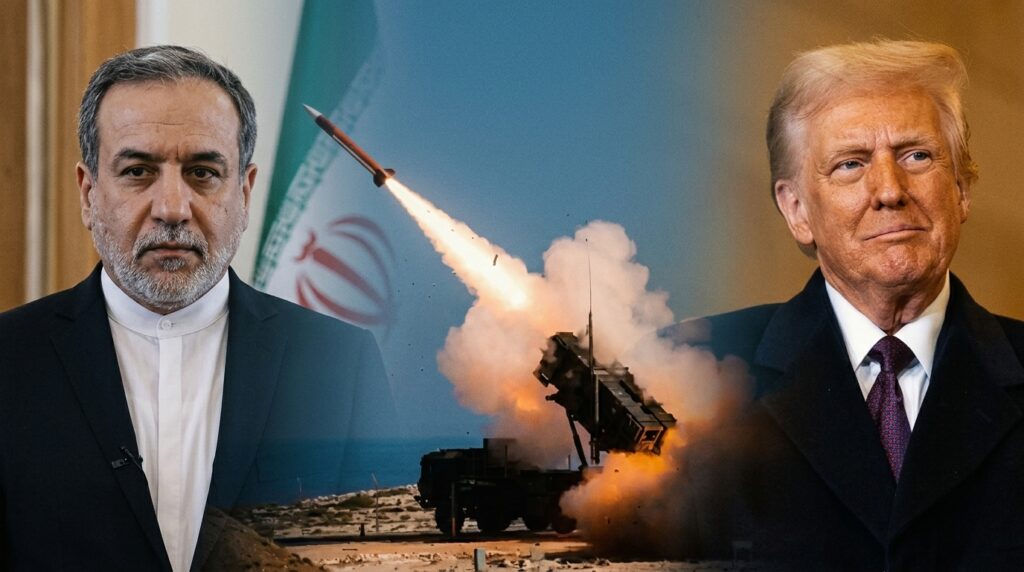
In 2025, amid negotiations about a nuclear deal between the US and Iran, Israel launched strikes across Tehran, killing Khamenei’s top military officers (Council on Foreign Relations, 2026). US also bombed Iranian nuclear sites. After a period of respite marked by a naval blockade, the US and Israel returned in February 2026 to launch further strikes on multiple sites in Iran, killing Iranian leader Khamenei in the process. As retaliation, Iran closed the strategic Strait of Hormuz and launched attacks on US assets in the Middle East. Overall, against all expectations, Iran’s action of increasing the cost of aggression against the US and Israel caused a hurting stalemate that has compelled Trump to return to the negotiation table (Vakil and Maddox, 2026).
The Effects of US/Iran War on America and Iran
The closure of the Strait of Hormuz taught many citizens bitter but necessary lessons in geography. The formerly innocuous strategic choke point, which serves as a transit point for about 20% of global oil and other essential industrial raw materials, gained popularity after it was closed by Iran, causing a sharp increase in energy prices (Cohen and Casselman, 2026, para. 1). As the volume of oil that passed through the strait in prewar times fell from about 20 million to 10 million barrels per day during the war, so the price of oil rose from $70 per barrel before the war to $126 in April, before settling at $110 per barrel in September, 2026, prompting the head of the International Energy Agency (IEA), Fatih Birol, to refer to the closure as “the largest supply disruption in the history of the global oil market,” (Bordoff and O’Sullivan, 2026, para 7; Haass and Kissane, 2026). The disruption of global oil supply was further complicated by the obstruction of Bab el-Mandeb Strait that serves as an alternative transit route, by Houthis. Houthis and other Iranian-backed militias based in Iraq also targeted energy infrastructure in Saudi Arabia.
Recently, Secretary of the Treasury, Scot Bessent, bragged that US will “economically asphyxiate the regime,” and Iranians are paying a heavy price, both in loss of lives from aerial bombings and economic blockade by Washington. Prices of bread rose by more than 100%, from less than 1 cent (13,500 Iranian rials) in prewar time to more than 2 cents (27000 rials) in June 2026 (Abedi, 2026; Bajoghli and Nasr, 2026, para.1; Doucet, 2026). As the local currency continues to depreciate against the dollar and inflation soars, Iranian government was compelled to increase the price of PMS a few times to shore up revenue and to curb consumption (AFP and Reuters, 2026). However, as they rally around the flag, Iranians accept economic hardship as a small price to pay to defend their country from US aggression (Bajoghli and Nasr, 2026).
Ironically, America is not protected from the ravages of the war. According to Congressional Budget Office (CBO), the cost of the six-month war totaled $38bn and would increase by $3bn every month (Osgood and Reuters, 2026). Also, US lost scores of military aircraft; not less than 30 MQ-9 Reaper drones, which cost a minimum of $30 million per drone; damage to buildings housing American forces in Middle East; and not less than 11 military crew members were killed (Sharma,2026). On the domestic scene, according to Watson Institute for International and Public Affairs, Brown University, Americans paid an extra $100bn for PMS and AGO between February and August 2026, with each household across US contributing an extra $763 (Ali, 2026; The Watson School of International and Public Affairs, 2026). According to American Automobile Association (AAA), there is about a 30% national average increase in PMS prices compared with September 2025. In some cities, prices have nearly doubled from about $3.68 per gallon in 2025 to $6.28 per gallon in October 2026 (Cordall, 2026; Diaz, 2026). The cascading effect of this increase is reflected in the spike in prices of essential foodstuffs. The subsequent inflation and erosion of Americans’ purchasing power have further inflamed antiwar sentiments. Unsurprisingly, with midterm elections imminent and a recent Pew Research Center poll showing that about 65% of Americans disapprove of the manner Trump has conducted the war, the president is taking desperate measures to improve global supply of oil to keep prices down, and he promised to suspend further strikes on Iran until after elections (Al Jazeera Staff, 2026).
The Effects of the US/Iran War on the Russia-Ukraine Conflict
The implications of US war in Iran are many for both Ukraine and Russia, with the balance tilting in favor of Russia. The war in Iran and its pull on global energy prices have taken international media attention away from Kyiv, ensuring that Russia’s daily ballistic onslaught against civilian targets across Ukraine and the resultant casualties are underreported or ignored (Kobzová and Leonard, 2026). The Geneva Conventions of 1949 and Additional Protocols (1977) demand that combatants differentiate between civilian and military institutions during war. However, since the beginning of the war, Russia has consistently targeted Ukrainian civilian institutions and homes as a means to demoralize its military and leadership. This breach by Moscow constitutes a war crime, and consistent global focus puts pressure on the Kremlin and further affects Russia’s global image. The war in Iran therefore allows Russia to evade media focus and pressure. For instance, from March 23 to March 24, 2026, Russia launched its largest aerial attack across Ukraine, consisting of over 948 drones and lasting more than 24 hours; three persons died and scores were injured; the attack also damaged Bernardine monastery, a 16th century UNESCO World Heritage site located in Lviv; the sustained attack and destruction did not receive the usual media attention because of focus on US/Iran War (Gozzi and Lukiv, 2026; Kobzová and Leonard, 2026). As media attention shifts, so do policy priorities in Western capitals, and these affect the frequency of parliamentary or congressional deliberations and monetary commitments to Ukraine (Globsec, 2026).
Another effect of US war against Iran is the hurdle it places in the way of the mediation process of Russia-Ukraine War. Riyadh and Abu Dhabi were acceptable venues to the parties in conflict, but these venues are no longer safe due to escalation by Iran and its Houthi allies. Also, the war has slowed down mediation efforts by US as its concentration shifts to the Middle East (Kobzová and Leonard, 2026).
However, two major benefits of the US-Iran war to Russia deserve deeper analysis. One is disruption of oil supply and the subsequent increase in prices that compelled the UK and US to ease sanctions on Russian oil. This decision allowed Russia to maintain its hardline position (AFP and The Associated Press, 2026; Islam et al., 2026). Specifically, Trump administration’s decision through General License 134B, in March 2026, to ease oil sanctions on Russia provided a lifeline for Russia’s struggling economy, which was held down by Western sanctions and Ukraine’s attack on Moscow’s energy infrastructure (Ash, 2026; Department of the Treasury, 2026; Hoskins and Mitchell, 2026).
Expectedly, Ukraine and its allies criticized the decision that allowed about 100 million barrels of Russian oil at sea to be sold. Ukraine’s President Zelensky stated that the decision would swell Russia’s coffers by about $10 billion, which would be used to prosecute Moscow’s war of aggression.
Centre for Research on Energy and Clean Air (CREA) reported that the decision by US increased Russia’s fossil fuel export income for March 2026 by 52%, from €492 million per day in February 2026 to €713 million per day in March 2026. The figure for February represents the lowest since the start of the war, and the figure for March represents the highest figure recorded in two years. Also, Russia’s tax revenue from crude doubled in March 2026 (Wickenden and Levi, 2026).
The figures by CREA were corroborated by Kyiv School of Economics (KSE), which puts Russia’s oil export revenue for February 2026 at $9.5 billion, the lowest figure since the start of the war and a drop of $1.5 billion compared with January 2026; also, KSE recorded a surge in Russia’s export revenue for March 2026 to $19.0 billion (Kyiv School of Economics, 2026). This figure affirms Zelensky’s projection of the value of Russia’s windfall due to the easing of sanctions. The easing of sanctions strengthens Moscow’s ability to continue its aggression against Ukraine and proxy war against Europe. The decision also tests the relationship between US and its allies.
Also, the war forced US and its Middle East allies to burn through their stock of munitions, particularly Patriot PAC-3 missile interceptors, which Ukraine requires to protect its cities from Russian Iskander and Kinzhal ballistic missiles. Notably, only US produces this antiballistic weapon (Person, 2026). Accordingly, Russia is taking full advantage of the gap in Ukraine’s air defense and has increased aerial assaults since February 2026. The enormity of this security dilemma is underlined by Ukraine’s commanders’ report that Kyiv needs between 60 -100 Patriot PAC-3 interceptors to effectively counter Moscow’s increased ballistic missile onslaught; yet, according to Foreign Policy Research Institute (FPRI) available records, the US produces about 600 Patriot PAC-3 interceptors annually (Amoah et al., 2026; Globsec, 2026; Livingstone, 2026). Russia’s relentless aerial attacks and the lack of adequate interceptors have increased the number of civilian deaths in Ukrainian cities and also reduced Ukraine’s power-generating capacity from 33.7 GW at beginning of the war to 14 GW, a staggering setback of almost 58% (Globsec, 2026; Livingstone, 2026). In July 2026, according to the UN Human Rights Monitoring Mission in Ukraine (2026), 448 persons were killed and 2,675 injured. The numbers more than quadrupled in August 2026, to 2,222 persons killed and 13,058 injured. These figures represent more than a 58% increase compared with the same period in 2025. Without US – Iran War, the expensive and chronophagous patriot missiles that were deployed in Riyadh, Abu Dhabi, and Gulf states would be available to protect Ukraine.
How US/Iran War Affects Ukraine
Ukraine is fighting an existential war against Russia as Putin takes a maximalist position and insists he will accomplish all his war aims (Kola, 2025). Putin’s war aims are spelt in his demands: (1) Ukraine should abandon its ambition of joining NATO; (2) Ukraine should cede the four contested and partially occupied Ukrainian regions, including 10% of the Donbas area which Russia was unable to possess through coercion; (3) Ukraine should recognize Russia’s sovereignty over Crimea; and (4) Ukraine should be demilitarized; Russia seeks to impose a ceiling on the number of Ukraine’s military and types of weapons Kyiv can possess (Dickinson, 2025; Faulconbridge, 2026; Gozzi, 2025).
Ironically, Kyiv was jubilant when US and Israel launched an attack on Iran in February 2026. The reason for elation in Ukraine is understandable. Since the beginning of the war, Tehran has been supplying Moscow with Shahed kamikaze drones, short-range ballistic missiles, and Soviet-caliber artillery (Mirovalev, 2026). As the war progressed, Russia upgraded Iranian Shahed drones with artificial intelligence, making them more precise and difficult to intercept.
As part of Russia-Iran security cooperation, Moscow has been providing intelligence and drones to Iran in its war against US (Bertrand et al., 2026). Also, Russia offered to stop providing intelligence to Iran if Washington cuts intelligence support for Kyiv (Prokofyev and AFP, 2026). Although there is no confirmation that America accepted Moscow’s offer, however, recent concerns regarding pausing of intelligence by Washington after Trump demanded that Kyiv halt strikes on Russia’s energy infrastructure points to a shift in American support. In October 2026, Ukraine was hit by two waves of missile attacks within two days without warning from Washington; Elon Musk joined the debate and pointed out that ownership and control of Starshield systems, the defense-grade affiliate company of Starlink, are exclusive preserve of US President (Méheut and Gall, 2026; Weitheimer, 2026). Musk also accused Kyiv of breaching Starlink’s terms of contract (Kent et al., 2026).
Furthermore, the longer US – Iran war drags on, the more fragile Western unity and support for Ukraine become due to pressure from scarcity of oil. US’ recent decisions to buy AGO from Moscow attracted criticism from allies (Astakhova and Soldatkin, 2026). However, it will be recalled that earlier in 2026, Belgium’s Prime Minister, Bart De Wever, urged EU to normalize relations with Russia so the bloc can access cheap gas (Rankin, 2026). Such demands will grow and may be consummated if US-Iran war lingers.
Recommendations
Only maximum economic pressure can compel Russia to come to the negotiation table with fair demands, and US under Trump has proven to be an unreliable partner. The responsibility for Ukraine’s security therefore rests mainly on Kyiv and EU. Fortunately, Ukraine has shown remarkable adaptability, transforming from a security-recipient country in 2022 to a valuable global security partner through its innovative and expanding drone industry (Halstian, 2026). In spite of easing of sanctions, Ukraine’s potent drone attacks on Moscow’s energy infrastructure continue to erode projected Russian revenues, forcing projections for its Gross Domestic Product (GDP) deficit to shift from 1.6 to 3.2% (Rahman, 2026). In June 2026, Russia’s combined refinery output fell to 3.8 million barrels per day, the lowest figure recorded in two years; this is about 30% less than figures obtained in the same period in 2025; gasoline supply also decreased by 20% compared with supply in 2025; AGO production decreased by about 30% compared with 2025 figures (Martin and Vatman, 2026; Rimutis, 2026). While EU continues to apply economic pressure through sanction packages, Ukraine should increase its strikes on Russia’s energy infrastructure and warehouses storing military components (Bennett and Adams, 2026). Zelensky rebuffed Trump’s advice for Kyiv to halt attacks on Russia’s energy infrastructure and correctly stated that Ukraine has a right to defend itself (Wertheimer and Beake, 2026).
Furthermore, in spite of the easing of oil sanctions on Russia, prices of gas in US and Western cities continue to rise; therefore, easing Moscow’s oil sanctions is not worth sacrificing the unity of EU members. The EU should seek diplomatic means to apply pressure on Washington to end the war in Iran, which Brussels regards as a war of choice (Kobzová and Leonard, 2026).
Conclusion
Russia would increasingly seek to influence elections in EU states and Washington in favor of far-right candidates. Spain will be the first testing ground in 2026, followed by other EU states in 2027. Like in 2016, Russia will seek to influence US election in 2028. Russia’s goal is to consistently drive a wedge between Washington and Brussels and within EU members through disinformation and other subversive means (Garvey, 2026). Fittingly, EU’s Center for Democratic Resilience against Russia’s disinformation was established to counter Russia’s subversive strategies (Rankin, 2025).
Overall, EU has adopted a proactive approach of seeking peace with Moscow through preparation for war. After Ukraine’s invasion, EU leaders met in March 2022 and ratified the Versailles declaration, committing the bloc and member states to investing in their defense and cutting down on geopolitical security and energy dependencies (European Council of the European Union, 2026; European Union, 2022). The Versailles declaration has been consolidated in subsequent meetings. EU, through its White Paper, has set a target for autonomous and robust defense readiness in 2030 (European Union, 2026). However, Ukraine’s need to survive Russia’s missile onslaught this coming winter is pressing, and Kyiv and Brussels must stand shoulder to shoulder and hope that US midterm elections provide a shift in congressional balance through victory for democrats at the midterms. Hinging a turnaround in relationship and support for Ukraine on Democratic Party victory at the midterms appears speculative; however, pre-election polls indicate that this reality is plausible, and the prospect is brightened by bipartisan push by members of Congress who are asking Trump to reverse his decision to suspend several sections of the Graham Act on Russia; they have also called for investigation into Starlink service disruption in Ukraine (Burgess, 2026; Matza, 2026; NBC News, 2026; US Congress, 2026).
References
Abedi, H. (2026). Tehran bread prices jump up to 100% in latest increase. Iran International. https://www.iranintl.com/en/202606237339.
AFP & Reuters. (2026). As fuel prices rise again, Iran’s government urges citizens to cut back. Al Jazeera. https://www.aljazeera.com/amp/news/2026/9/8/as-fuel-prices-rise-again-irans-government-urges-citizens-to-cut-back.
AFP & The Associated Press. (2026). UK eases sanctions on Russian oil imports as fuel prices soar. Al Jazeera. https://www.aljazeera.com/amp/news/2026/5/20/uk-eases-sanctions-on-russian-oil-imports-as-fuel-prices-soar.
Ali, M. (2026). Iran war: How US consumers spent an additional $100bn on fuel. Al Jazeera. https://www.aljazeera.com/news/2026/9/7/iran-war-how-us-consumers-spent-an-additional-100bn-on-fuel.
Al Jazeera Staff. (2025). History of US-Iran relations: From the 1953 regime change to Trump strikes. Al Jazeera. https://www.aljazeera.com/amp/news/2025/6/23/history-of-us-iran-relations-from-the-1953-regime-change-to-trump-strikes.
Al Jazeera Staff. (2026). Is Trump signaling a return to war with Iran after the midterms? Al Jazeera. https://www.aljazeera.com/news/2026/10/9/is-trump-signalling-a-return-to-war-with-iran-after-the-midterms.
Amoah, M., Brazilian, M. D., & Matisek, J. (2026). Scaling Patriot production: The industrial base crisis explained. Foreign Policy Research Institute. https://www.fpri.org/article/2026/05/scaling-patriot-production-the-industrial-base-crisis-explained/.
Ash, T. (2026). The Iran war has been an economic gift for Putin. Chatham House. https://www.chathamhouse.org/2026/04/iran-war-has-been-economic-gift-putin.
Ashraf, A., & Banuazizi, A. (1985). The state, classes and modes of mobilization in the Iranian revolution. State, Culture, and Society. JSTOR, 1(3), 3–20. https://www.jstor.org/stable/20006815.
Astakhova, O., & Soldatkin, V. (2026). Russia says its diesel exports may exceed volumes announced by Trump. Reuters. https://www.reuters.com/business/energy/russia-says-it-may-export-up-35-million-tons-diesel-month-by-year-end-2026-10-12/.
Bajoghli, N., & Nasr, V. (2026). Iran’s theory of victory: Tehran’s fight for great-power status in the post-American Middle East. Foreign Affairs. https://www.foreignaffairs.com/iran/irans-theory-victory.
Bennett, T., & Adams, P. (2026). Russian online retail warehouses hit by deadly Ukrainian strikes. BBC News. https://www.bbc.com/news/articles/clyxlm877p2o.
Bertrand, N., Sciutto, J., Cohen, Z., & Hansler, J. (2026). Russia is aiding Iran’s war effort by providing intel on US military targets, sources say. CNN. https://edition.cnn.com/2026/03/06/politics/russia-aiding-iran-targeting.
Bordoff, J., & O’Sullivan, M. L. (2026). The Iran shock and the dangerous allure of energy autarky. Foreign Affairs. https://www.foreignaffairs.com/iran/iran-shock.
Burgess, J. (2026). US senators call for investigation into Ukraine’s Starlink restrictions. BBC News. https://www.bbc.com/news/articles/cq398zl8jmvdo.
Cohen, P., & Casselman, B. (2026). The U.S. started the war. The rest of the world is feeling the effects. The New York Times, para.1. https://www.nytimes.com/2026/04/27/business/economy/iran-war-global-growth.html.
Cordall, S. S. (2026). Trump’s Iran war now has a midterm election problem. Al Jazeera. https://www.aljazeera.com/news/2026/9/10/trumps-iran-war-now-has-a-midterm-election-problem.
Council on Foreign Relations. (2026). Conflict with Iran: Global Conflict Tracker. Council on Foreign Relations. https://www.cfr.org/global-conflict-tracker/conflict/confrontation-between-united-states-and-iran.
Cullis, T. (2016). The Iran deal after Obama: An agreement that endures the test of time. Foreign Affairs. https://www.foreignaffairs.com/articles/iran/2016-03-07/iran-deal-after-obama.
Department of the Treasury. (2026). General License 134B. Office of Foreign Assets Control. https://ofac.treasury.gov/media/935526/download?inline.
Diaz, A. (2026). Gas prices reverse course and start rising again. AAA Newsroom. https://newsroom.aaa.com/2026/07/gas-prices-reverse-course-and-start-rising-again/.
Dickinson, P. (2025). Russia’s insistence on a defenseless Ukraine betrays Putin’s true intentions. Atlantic Council. https://www.atlanticcouncil.org/blogs/ukrainealert/russias-insistence-on-a-defenseless-ukraine-betrays-putins-true-intentions/.
European Council of the European Union. (2026). European defence readiness. European Council of the European Union. https://www.consilium.europa.eu/en/policies/european-defence-readiness/.
European Union. (2022). Versailles declaration. European Union. https://www.consilium.europa.eu/media/54773/20220311-versailles-declaration-en.pdf.
European Union. (2026). White paper for European defence – Readiness 2030. European Union. https://commission.europa.eu/document/download/e6d5db69-e0ab-4bec-9dc0-3867b4373019_en?filename=White%20paper%20for%20European%20defence%20%E2%80%93%20Readiness%202030.pdf.
Faulconbridge, G. (2025). Putin sticks to Russian demands on Ukraine, says EU ‘robbery’ failed. Reuters. https://www.reuters.com/world/europe/putin-talk-war-peace-marathon-news-conference-2025-12-18/.
Garvey, N. (2026). ‘The Suicidal Fall of Europe’: Russia Reacts to Riots in France. Moscow Reacts to Riots in France. The Moscow Times. https://www.themoscowtimes.com/2026/10/19/the-suicidal-fall-of-europe-russia-reacts-to-riots-in-france-a94021
Geneva Conventions of 1949 and Additional Protocols. (1977). Article 51 – Protection of the civilian population. International Committee of the Red Cross. https://ihl-databases.icrc.org/en/ihl-treaties/api-1977/article-51.
Globsec. (2026). The war in Iran: Strategic implications for Ukraine. Globsec.
Gozzi, L. (2026). Putin doubles down on demands for Ukrainian territory ahead of talks with US in Moscow. BBC News. https://www.bbc.com/news/articles/cp84nl57v0lo.
Gozzi, L., & Lukiv, J. (2026). Russia launches 948 drones at Ukraine in largest attack over a 24-hour period. BBC News. https://www.bbc.com/news/articles/cz90gpyw90wo.
Gwertzman, B. (1979, November 18). U.S. decision to admit the shah: Key events in 8 months of debate. The New York Times. https://www.nytimes.com/1979/11/18/archives/us-decision-to-admit-the-shah-key-events-in-8-months-of-debate-8.html.
Haass, R., & Kissane, C. (2026). The stalemate with Iran is not sustainable: A diplomatic strategy to end the war. Foreign Affairs. https://www.foreignaffairs.com/iran/stalemate-iran-not-sustainable.
Halstian, M. (2026). A first point view: Examining Ukraine’s drone industry. Georgetown Security Studies Review. https://gssr.georgetown.edu/the-forum/regions/eurasia/a-first-point-view-examining-ukraines-drone-industry/.
Hoskins, P., & Mitchell, A. (2026). US easing of Russia oil sanctions draws criticism. BBC News. https://www.bbc.com/news/articles/clyzj3g3pygo.
Islam, F., Race, M., & Landale, J. (2026). UK waters down new Russian oil sanctions as fuel prices rise. BBC News. https://www.bbc.com/news/articles/cy42x3g7r89o.
Kent, L., Gak, K., & Tanno, S. (2026). Musk accuses Ukraine of violating Starlink’s terms of service following dispute over coverage. CNN. https://edition.cnn.com/2026/10/25/europe/starlink-musk-violation-accusations-intl
Kobzová, J., & Leonard, M. (2026). What the Iran war means for Ukraine [Audio podcast episode]. European Council on Foreign Relations. https://ecfr.eu/podcasts/episode/what-the-iran-war-means-for-ukraine/.
Kola, P. (2025). Putin says Russia will achieve all aims militarily if Ukraine does not agree deal. BBC News. https://www.bbc.com/news/articles/c4g7dze5n1vo.
Krawatzek, F., & Sasse, G. (2024). The political diversity of the new migration from Russia since February 2022. Centre for East European and International Studies. https://www.zois-berlin.de/en/publications/zois-report/the-political-diversity-of-the-new-migration-from-russia-since-february-2022.
Kyiv School of Economics. (2026). Russian oil tracker – April 2026: Russia’s oil revenues nearly doubled in March amid the war in Iran. Kyiv School of Economics. https://kse.ua/en/news/russian-oil-tracker-april-2026-russias-oil-revenues-nearly-doubled-in-march-amid-the-war-in-iran/.
Leung, B., Nyaga, A., Kirubel, H., & Gold, S. (2026). The Federation of Russia, Possibilities for 2035: A Predictive Essay. History International Relations and Politics. https://hirp.net/publications/the-federation-of-russia-possibilities-for-2035-a-predictive-essay/.
Livingstone, K. (2026). Ukraine is building a patchwork antiballistic defense, one stopgap at a time. Defense News. https://www.defensenews.com/global/europe/2026/10/12/ukraine-is-building-a-patchwork-antiballistic-defense-one-stopgap-at-a-time/.
Martin, D., & Vatman, D. (2026). Russian refining sector struggles amid intensifying Ukrainian attacks. International Energy Agency. https://www.iea.org/commentaries/russian-refining-sector-struggles-amid-intensifying-ukrainian-attacks.
Matza, M. (2026). Trump waives several Russia sanctions as row with Zelensky intensifies. BBC News. https://www.bbc.com/news/articles/cxr5yvzv7rp0o.
McDermott, R. (1992). Prospect theory in international relations: The Iranian hostage rescue mission. Political Psychology, 13(2), 237–263. https://www.jstor.org/stable/3791680.
Méheut, C., & Gall, C. (2026). Ukraine says it received no intelligence about strikes 2 nights in a row. The New York Times. https://www.nytimes.com/2026/10/13/world/europe/ukraine-trump-intelligence.html?smid=nytcore-android-share.
Mirovalev, M. (2026). How extensive is Russia’s military aid to Iran? Al Jazeera. https://www.aljazeera.com/news/2026/3/27/how-extensive-is-russias-military-aid-to-iran.
Mousavian, S. H. (2018, May 10). The strategic disaster of leaving the Iran deal: Trump is making the Middle East less safe. Foreign Affairs. https://www.foreignaffairs.com/articles/iran/2018-05-10/strategic-disaster-leaving-iran-deal.
NBC News. (2026). The race for Congress: 2026 midterms. NBC News. https://www.nbcnews.com/politics/2026-elections/midterms.
Osgood, B., & Reuters. (2026). Iran war increasing inflation, straining US munitions: Congressional report. Al Jazeera. https://www.aljazeera.com/news/2026/9/16/iran-war-increasing-inflation-straining-us-munitions-congressional-report.
Person, R. (2026). From Tehran to Donbas: What the Iran war means for Russia and Ukraine. Foreign Policy Research Institute. https://www.fpri.org/article/2026/03/from-tehran-to-donbas-what-the-iran-war-means-for-russia-and-ukraine/.
Prokofyev, V., & AFP. (2026). Russia offered to end Iran intelligence sharing if U.S. halted Ukraine support – Politico. The Moscow Times. https://www.fpri.org/article/2026/03/from-tehran-to-donbas-what-the-iran-war-means-for-russia-and-ukraine/.
Purdum, T. S. (1995). Clinton to order a trade embargo against Tehran. The New York Times. https://www.nytimes.com/1995/05/01/world/clinton-to-order-a-trade-embargo-against-teheran.html.
Rahman, M. (2026). Europe risks retreating on Ukraine just as Russia weakens. The Parliament.
Rankin, J. (2025). EU plans hub to tackle disinformation threat from Russia and other foreign powers spreading fake articles across social media. The Guardian. https://www.theguardian.com/world/2025/nov/07/eu-plans-centre-for-democratic-resilience-to-fight-online-disinformation
Ranklin, J. (2026). Belgian PM condemned over call to repair relations with Russia to ease energy costs. The Guardian. https://www.theguardian.com/world/2026/mar/16/belgian-pm-bart-de-wever-call-repair-relations-russia-energy-costs-condemned.
Rimutis, S. (2026). Between the Iran war and Ukrainian drones: How strikes on the oil sector are affecting Russia. Geopolitics and Security Studies Center. https://www.gssc.lt/en/publication/between-the-iran-war-and-ukrainian-drones-how-strikes-on-the-oil-sector-are-affecting-russia/
Sharma, Y. (2026). Dozens of aircraft, hundreds of buildings: US loss to Iran attacks revealed. Al Jazeera. https://www.aljazeera.com/features/2026/9/15/dozens-of-aircraft-hundreds-of-buildings-us-loss-to-iran-attacks-revealed.
Starr, S. F. (2024). Experts’ scenario on Russia’s future. Central Asia-Caucasus Institute & Silk Road Studies Program. https://www.silkroadstudies.org/publications/silkroad-papers-and-monographs/item/13506-experts-scenarios-on-russias-future.html.
The Kremlin. (2022). Address by the President of the Russian Federation. The Kremlin. http://en.kremlin.ru/events/president/news/67843.
The Watson School of International and Public Affairs. (2026). Iran war energy cost tracker. Brown University. https://iranwarcost.watson.brown.edu/.
The White House. (2002). President delivers State of the Union address. The White House. https://georgewbush-whitehouse.archives.gov/news/releases/2002/01/20020129-11.html.
Trainor, B. E. (1988). Errors by a tense U.S. crew led to downing of Iran jet, Navy inquiry is said to find. The New York Times. https://www.nytimes.com/1988/08/03/world/errors-tense-us-crew-led-downing-iran-jet-navy-inquiry-said-find.html.
UN Charter. (1945). Charter of the United Nations and Statute of the International Court of Justice. United Nations. https://treaties.un.org/doc/publication/ctc/uncharter.pdf.
UN Documents. (1970). Declaration on principles of international law concerning friendly relations and co-operation among states in accordance with the Charter of the United Nations (A/RES/2625(XXV)). Gathering a Body of Global Agreements. United Nations. http://www.un-documents.net/a25r2625.htm.
UN Human Rights Monitoring Mission in Ukraine. (2026). Protection of civilians in armed conflict – August 2026. Office of the United Nations High Commissioner for Human Rights. https://ukraine.ohchr.org/en/Protection-of-Civilians-in-Armed-Conflict-August-2026.
US Congress. (2026). Division A—Lindsey O. Graham Sanctioning Russia and Iran Act of 2026. US Congress. https://www.congress.gov/119/bills/hr5334/BILLS-119hr5334enr.pdf.
Vakil, S., & Maddox, B. (2026). US and Israel attack Iran, killing Khamenei. Tehran launches counterstrikes: Early analysis from Chatham House experts. Chatham House. https://www.chathamhouse.org/2026/02/us-and-israel-attack-iran-early-analysis-chatham-house-experts.
Weinraub, B. (1985). President accuses 5 ‘outlaw states’ of world terror. The New York Times. https://www.nytimes.com/1985/07/09/world/president-accuses-5-outlaw-states-of-world-terror.html.
Wertheimer, T., & Beake, N. (2026). Zelensky says Ukraine has right to defend itself after Trump calls latest strikes a ‘disgrace.’ BBC. https://www.bbc.com/news/articles/c58jz174w89ro.
Wickenden, L., & Levi, I. (2026). March 2026 – Monthly analysis of Russian fossil fuel exports and sanctions. Centre for Research on Energy and Clean Air. https://energyandcleanair.org/march-2026-monthly-analysis-of-russian-fossil-fuel-exports-and-sanctions/.
Wu, L., & Lanz, M. (2019). How the CIA overthrew Iran’s democracy in 4 days. npr. https://www.npr.org/2019/01/31/690363402/how-the-cia-overthrew-irans-democracy-in-four-days.