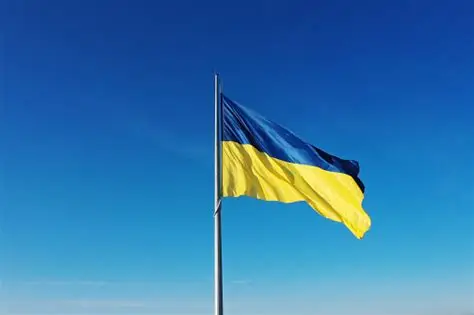
The sky over Ukraine turned crimson, as missile after missile, fired by the invading Russian army found its mark. Skyscrapers swayed wildly in the chilling cold before succumbing to the mortal blow of the Kinzhal missile. The ear-splitting screams of children and the aged mixed with the splintering sound of glasses to produce a numbing sensation that left many lifeless. Yet, Ukrainians rallied, some mounted armored tanks, many embraced assault rifles, others volunteered to take supplies to the front lines, still a few clutched their pen and papers. It was all they had, but it was enough.
Viktoria Amelina was a poet, a writer and human right activist, who nudged by her childhood experiences, decided to chronicle the history of her people and project it above the deafening roar of seasoned, well-oiled Russian propaganda. For many centuries, the history of Kyiv was told by Moscow. Amelina may not have read Chinua Achebe’s books, but she certainly would have heard the name. In one interview with Paris Review in 1994, Achebe said: “Until the lions have their own historians, the history of the hunt will always glorify the hunters.”
Russia did everything to glorify Moscow at the expense of Kyiv. In an article: Expanding the Boundaries of Home – a Story for Us All, Amelina stated: “Russia invested in my Russianization without any hesitation.” She was sure the Russian Federation invested more money in the education of children like her from former Soviet colonies than they did in the education of children in rural Russia; “those who were already conquered didn’t need to be tempted with summer camps and excursions to the Red Square,” she concluded.
As a 15-yr-old, Amelina saw through the Russian game of deceit, turning her excitement at the excursion in Moscow to nightmare. A famous journalist from a renowned television channel in Russia asked her: “How oppressed do you feel as a Russian speaker in the west of Ukraine? How dangerous is it to speak Russian on the streets of your home town, Lviv?” Her answer was blunt but sharp: “I don’t experience any oppression. Maybe your information is outdated? I am young, and there’s no such problem among the younger generation.”
At such a young age, Amelina realized that “The winds of change” were nothing more than an illusion”. Amelina, was more fortunate than the “older man from Mariupol” who believed in this “Russian world” until his home was left in ruins so late in life by those he called brothers! There would be no such illusion for Amelina, she had enough time to ensure she lived her dream of turning “out to be one of the worst investments of the Russian Federation.”
With her pen, she began to document the war crimes of Russia. On September 24, 2022, Amelina found Volodymyr Vakulenko’s diary buried in his garden. Like Amelina, Vakulenko was a Ukrainian writer and committed patriot who despite his disability (badges of honour from beatings received during the Revolution of Dignity and his time with the Soviet Union army) and the burden of sole responsibility for his autistic son, volunteered to help raise fund for the army through social networks. If Vakulenko made a wish when he buried his diary in his garden in his native Kapitolivka, perhaps it was that the hidden treasure would be found by a fellow patriot, committed to publishing Ukraine’s narrative of Russia’s annihilation of a peace-loving, but fiercely independent people.
The more things change, the more they remain the same. Amelina recalled how Soviet army in 1942, during Lviv pogroms murdered more than 100,000 Jewish citizens. This was after the Great Famine or Holodomor of 1932-33, which Soviet leader Josef Stalin engineered to kill millions of Ukrainians. For more than a century, Russia has waged a war of repression and aggression on Ukrainian art and literature. Every unprovoked war is an opportunity for Russia to silence the voice of Ukrainian culture. The past is found in the now. In early 1930s, there were about 259 active, Ukrainian writers in the Soviet Union. Fast forward to 1939, only 36 were alive. Only seven out of 223 died of natural causes, 17 were shot, 16 went missing, 175 were locked up in camps, and eight conveniently committed suicide (lithub.com). Leading lights from this era include, Les Kurbas, Mykola Khvylovy, Mykhailo Semenko and others. What Stalin and Brezhnev did in the 1920-30s and ‘60s, Putin has reinforced in what Kyiv Post referred to as “linquicide”.
An article by Kyiv Independent says: “Russia has committed over 1,271 crimes against Ukraine’s cultural heritage” since February 2022. Ukrainian historian, Yaroslav Hrytsak is emphatic that: “It’s a cultural genocide against Ukraine”. No wonder Amelina thinks: “A wall between us and Russia is a good solution until Russian society undergoes significant changes.” But why walls not borders? Are borders not enough? “One thing remains indisputable; humanity constantly messes up with borders. We let the wrong people in and keep the right people out. We pay too much attention to appearances, the color of skin, the color of passports,” the activist and award winning writer lamented. “We could pay more attention to core values like freedom, dignity, and the rule of law, which we either share or not,” implored the devoted Ukrainian, who for love of her motherland, spurned the opportunity to reside and obtain Canadian citizenship.
Ultimately, Amelina wants us to answer one question: “Who are you?” You are either on the side of justice and the rule of law or you are against it. Amelina took a stand. A stand for a free, independent and vibrant Ukraine. A stand for a kind world, without borders. The expansionist invaders may have silenced her pen, but they could never silence her voice. Amelina’s voice would go on guiding coming generations of Ukrainians to take a stand and speak up for Ukraine. Thanks to the sacrifice of Amelina and other patriots, the veil of silence covering Ukrainian history is forever shredded.
This article was written in 2023 by Soni Gold.