Like the giant arm of the Florida crab, the raking arm of the bulldozer tore into the lavishly dressed building, tearing apart piece-meal, the Gerald roof tiles, parapet, beams, pillars, splintering glasses, wood, and generally adding to the tempo of commotion as neighbors and passers-by gathered to take in the eerie scene in awe, their arms folded across their breasts and mouths agape. Inside the disappearing edifice, Ejikeme Paul (not real name) and his family scampered to retrieve whatever valuables they could muster, risking their lives. According to him, the notice for demolition by Lagos State government arrived in the morning at 8 am and they were given two hours’ notice. At 10 am prompt, the bulldozers arrived accompanied by armed law enforcement officers, and without much exchange of words, set about their task like professional undertakers.
It was the second time in few months that buildings owned by citizens from eastern part of the country would be targeted for demolition. The first time was in April after the general elections, it is the price Igbos are paying for ensuring the “anointed” president lost in his home state. It was not only Igbos that voted against the All Progressive Congress Party candidate in the presidential elections, many well-meaning Nigerians, including fellow Yorubas voted against him. For these patriotic Nigerians, eight years of President Buhari’s locust years, should not be accompanied by another four years of servitude under a frail looking, sickly candidate, who refused to engage with the citizens during campaign nor bothered to provide answers for the litany of damning allegations about his past. President Tinubu is now fully ensconced in Aso Rock and has moved quickly to annexed all the institutions of government; but there is angst on the streets and hunger in many bellies, coupled with a deep sense of injustice, helplessness and hopelessness, these are the ingredients for violent revolutions. Nigeria’s democracy midwifed by the U.S. in 1998 is bursting at the seams and may not tarry till the next round of general elections.
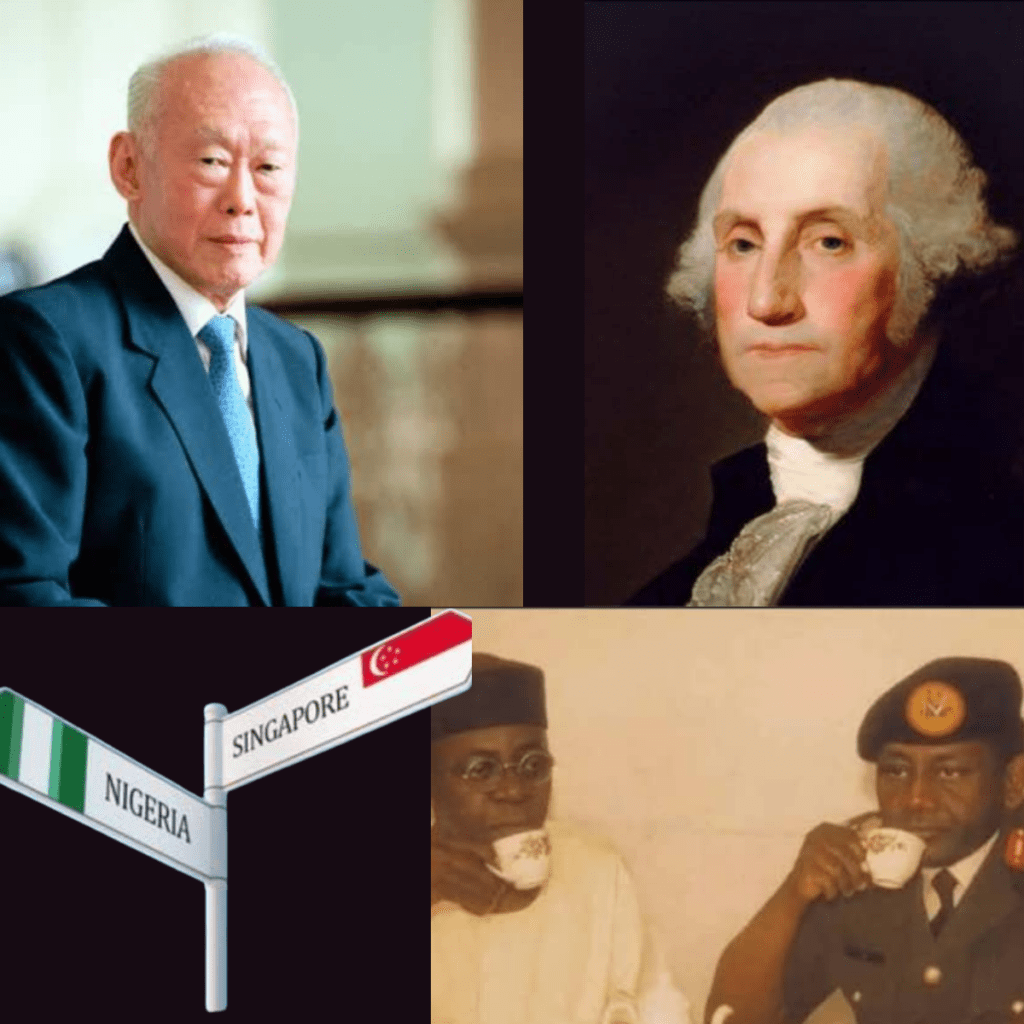
Men matter, women too; individual leaders matter. Bayman and Pollack in “Let Us Now Praise Great Men” argue that policy makers and political scientists often ignore the role of individual leaders in international relations, instead they focus on the role of impersonal forces and the effect of the anarchical global order which constrain leaders to act in certain manner. Agreed, these variables are important but they are not more important than the role of individual leaders. To ignore the role of leaders in forging states or bringing states to their knees is to condemn all human endeavor to fate. The U.S. for nearly a century has been a major player on the global scene and for more than three decades the unchallenged single hegemon. This did not happen by chance; neither is it due to impersonal forces or the effect of anarchical global order. More than any other factor, the rise of the U.S. and its enduring stamina on the global stage is the result of a sequence of patriotic, visionary leaders, individuals who committed their all to ensuring their country and citizens prospered. These leaders made their fortunes, shaped the impersonal forces, and created the existing global order to favor their country. The U.S., led by General George Washington, purchased its freedom from Britain with blood shed on the battlefield. Perhaps that experience helped American leaders to put greater premium on freedom and liberty but other leaders could have endured the same experience and come away with nothing worthwhile.
In 1938, Germany was doing very well until Hitler decided to embark on a self-destructive expansionist program that set the world ablaze. If Hitler stayed on the course of dialogue and negotiation to reverse the ills of the Treaty of Versailles, today, in all likelihood, Germany would be a nuclear armed state, super power, and one of the permanent members of the U.N. Security Council. Individual leaders matter. They are the difference between a developed West and the U.S. and underdeveloped Africa with more than 70% of humanity and a land mass that is bigger than Europe and South America combined and brimming with untapped riches.
Like the U.S., Singapore obtained independence from Britain and has a similar trajectory at birth like Nigeria, in fact, Nigeria had better prospect with the discovery of oil. Like Nigeria which was a British contraception made up of different nations, so was Singapore conjoined with Malaysia, but where Singapore broke away from the troublesome union, Nigeria remained one fractured state after enduring three years of civil war. But the greatest problem of Nigeria is not the amalgamation of so many nations with contrasting cultures, Nigerians at all levels have learnt to live together. The greatest problem of Nigeria is the endemic culture of venal governance and mediocrity. Nigerian leaders project cultural differences among the ethnic groups and set them on collision course when it suits them.
The difference between Nigeria and Singapore is Lee Kuan Yew and those who came after him. For all his flaws, no one can doubt that Lee Kuan Yew took Singapore from an impoverished, underdeveloped country that was rejected by Malaysia to a developed economy and functional society. Today, Nigeria has neither a democracy nor a functioning society. For the love of the country, Nigerians must come together to find ways to save the crumbling democratic structures, but who will bell the cat?