The federal government through the Minister of Information and Culture, Lai Mohammed is determined to translate the social media bill into law soon. In the aftermath of the #EndSARS protest, Mohammed covered thousands of kilometers meeting with political and traditional leaders in the six geopolitical zones across the country. While northern leaders were unanimous in their support for social media regulation, there were dissenting voices in the south. However, on the streets and across social media platforms, the bill was met with deafening roar of rejection by the people. Yet Mohammed said there is no going back.
The Protection from Internet Falsehood and Manipulation Bill 2019 has since passed second reading on the floor of the Senate. A section of the bill prescribes a fine of #300,000 ($600) or three-year jail term or both for anyone found guilty of making statements that “diminish public confidence in the performance of any duty or function, or in the exercise of any power of government.” Part 3 (12) of the bill gives law enforcement agencies the power to shut down access to the internet and social media without recourse to the National Assembly or a court. It says: “Law enforcement agencies may direct the Nigerian Communications Commission (NCC) to order the internet access provider to take reasonable steps to disable access to end-users in Nigeria to the online location (in this clause, it is called an access blocking order), and NCC must give the internet access provider an access blocking order.” Any internet service provider that refuses to obey the order on conviction by a court may be fined #10 M ($20,000) for each day the order is not obeyed.
For a country where public confidence in the performance of government is extremely low, the bill if passed into law is a gag on free speech.
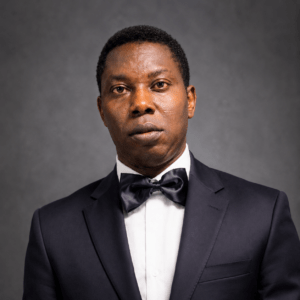
Gimba Kakanda, poet and columnist with Daily Trust Newspaper, said Nigerians must be wary of having “a regulator whose horse is in the race”. Professor Ayobami Ojebode, immediate past Head of Department, Communication and Language Arts, University of Ibadan, in an interview, expressed his views on the implication of the social media bill and proffered solution to successfully navigating the impasse.
In the same hour when soldiers from the Nigerian Army were shooting at protesters at Lekki tollgate, the Nigerian Broadcasting Commission (NBC) issued new guidelines warning media houses not to utilize online user-generated contents in a manner that could embarrass government or individuals. Three media houses were subsequently fined for their role in the coverage of the incident. What does this portend for the freedom of the press and its ability to serve as watchdog of the society?
“We were approaching a dangerous precipice. The peaceful, decent, high-class protests that delighted all of us had been hijacked by hoodlums who were out to kill and destroy. In a situation like that, care had to be taken in reporting events. All that was needed for the nation to go into conflagration was just a little spark. I do not hold brief for NBC, but I think that was why NBC issued that warning. And NBC thought they were violated by those broadcast stations.”
Ojebode advised the media stations affected by the fine to approach the court because in his words: “NBC can be wrong, can be subjective because NBC decision makers are human, and because NBC is under the tight reign of the minister”.
Indeed, the minister has continued to maintain that both the social media bill and the NBC guidelines are in public interest. Addressing a meeting of the Guild of Corporate Online Publishers in Abuja, Mohammed stated: “As I have said many times no responsible government will sit by and allow fake news and hate speech to dominate media space because of the capacity of this menace to exploit our fault lines to set us against each other and trigger a national conflagration.”
However, Nigerians and the media see the minister’s effort as attempt to suppress facts and muzzle free speech. So who defines public interest and are there no provisions in our existing laws to deal with fake news or hate speech? Is the social media bill a necessity?
“No one knows what public interest means anymore. Often it is the interest of the elite and government. This is why we must contend and contest every definition of that interest.” Ojebode believes that the Cybercrime Act 2015 and 1999 Constitution are sufficient to deal with fake news or hate speech. “ Fake news is fast losing its grip – Nigerians have become wise and skeptical.” He said Nigeria can learn from best practices without gaging the press. “For me, the long term solution is to introduce critical thinking, media literacy, deconstruction skills in the primary, secondary and higher-level schools. That was the approach in Finland. It will almost totally eliminate fake news in ten years.”
Will the minister and the federal government yield? At the moment, like prosperity preachers and Malachi 3:10 (Bring the whole tithe into the treasure-house, that there may be food in my house, and prove me now herewith, saith the Lord, Jehovah of hosts, if I open not to you the windows of heaven, and pour you out a blessing, that there shall not be room enough for,) they appear determined to project and amplify snippets of echoes from foreign lands that fit their purpose; from John Magufuli’s example in Tanzania to China and former United States’ President, Barack Obama’s interview with The Atlantic.
So what should the citizens and the press do? “The whole world is frustrated, cranky and angry. A recent Gallup polls shows that the world has never been this cranky in a long while. Every little heat is producing unbearable explosions everywhere.” Ojebode concluded: “Journalists have to be careful what to report and how. Citizens should also exercise restraint with what they post and how.” Government could also do with probity, accountability and transparency. A government with little to hide, has little to fear from journalists and the citizens.
Article written by Soni Gold in November 2020.