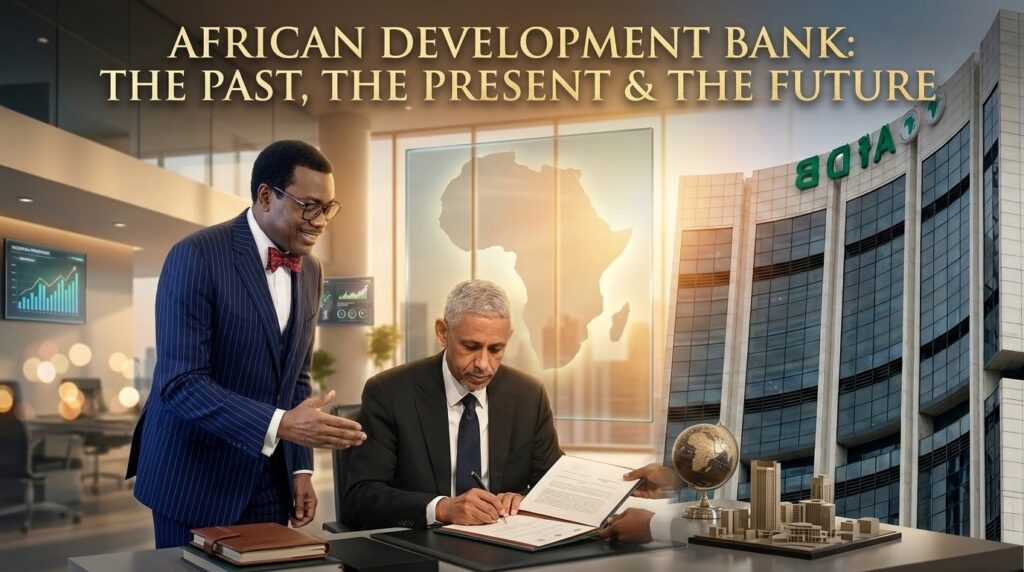
The African Development Bank (AfDB) has made tremendous strides since its creation on September 10, 1964. Beginning with 25 members, many of them newly independent African states and only 10 staff working in a borrowed office belonging to the Economic Commission for Africa in Addis Ababa, the capital of Ethiopia; and with a paltry capital base of $300 million under the Bank’s first President, Mamoun Beheiry (1964 – 1970), the first Governor of Sudan’s Central Bank and one-time Finance Minister; the Bank now has 54 members from the African continent and 27 members from outside Africa (Kwame Donkor, President of AfDB, 1976 – 1979, opened the door of the Bank to non-African members including the U.S. He was criticized for the decision which on hindsight, was a sound decision).
Also, AfDB currently has over 2000 staff; its own towering new headquarters in Abidjan, commissioned just two years ago, in 2024; a capital base of $318 billion; and AAA rating from Standard and Poor Moody’s and Fitch (African Development Bank Group, 2024; Adesina, 2024; Federal Ministry for Economic Cooperation, 2025; Maussion, 2025). The achievements of AfDB is particularly impressive because of the numerous challenges associated with its peculiar operational environment in Africa. It is important to note that AfDB’s successes are the products of consistent effort by successive presidents of the Bank to engineer both interstate and international cooperation. This paper will now examine some of AfDB’s interstate and international collaborative endeavors.
How AfDB Institutionalize Interstate and International Cooperation
Beginning in 1967, Kenya and Sierra-Leone were the first African countries to benefit from AfDB loans and investments. For Sierra-Leone it was an equity contribution in the National Development Bank of Sierra Leone, and for Kenya, it was a loan for construction of two road projects, one linking a section of Great Northern Road that connects Dar es Salaam, the capital of Tanzania with Nairobi and the other linking Kampala in Uganda (African Development Bank Group, 2024). The road projects, constructed between 1967 to 1971, cost $8.2 million and was undersigned by a partnership between AfDB and the US Development Agency (USAID).
The benefits of the road projects exceed by a wide margin the cost and expectations of stakeholders. After construction, daily traffic on the roads increased by 55% overshooting the projected 25% and this quickened return on investment as it stimulated agribusiness, trade and tourism within the East African region. The salutary outcome confirmed the Bank’s positive projection in approving the road projects. The strengths were listed as: international component of the road projects; development of the tourism sector; and opportunities for harnessing of agricultural resources along the project routes.
AfDB has since contributed to other road projects and investments in Kenya including the 50 km Nairobi Thika eight-lane highway, connecting a population of about a million persons and described by former President Mwai Kibaki as source of “national pride” (African Development Bank Group, 2012). Including Kenya, AfDB has positively impacted all 54 countries on the African continent. However, due to time and space constraints, this researcher will focus on a few of AfDB flagship initiatives and their impacts across the continent of Africa.
In 2017, AfDB launched the Technologies for Africa Agricultural Transformation (TAAT) and within eight years, the Bank contributed $60 billion to support 13 million farmers promoting climate smart agricultural methods across Africa (Adesina, 2024). Phase two of the TAAT program has already commenced and is focusing on 37 low-income African countries which are members of the African Development Fund (ADF), a subsidiary of AfDB (ADF was created in 1972 during the leadership of AfDB President Abdelwahab Labidi from Tunisia).
TAAT is a collaborative effort involving several Non-governmental agencies (NGOs), philanthropic donor agencies (Bill and Melinda Gate Foundation) the World Bank and international development agencies such as Norwegian Agency for Development Cooperation. TAAT II is estimated to impact additional 27 million farmers (African Development Fund, 2022; Maussion, 2025). Yet TAAT is just one pilot scheme supporting “Feed Africa,” one of the “High 5s,” being five developmental goals set by the Bank for the decade 2015 – 2025. Four other goals of the “High 5s” are: Light – up and Power Africa, Integrate Africa, Industrialize Africa, and Improve the Quality of Life for the People of Africa.
The “High 5s” were set during the leadership of Dr. Akinwumi Adesina, the 8th President of AfDB and former Minister of Agriculture in Nigeria. Also, as part of the “Feed Africa” initiative, the Bank supported Ethiopia with $84.3 million in 2023 to produce heat resistant wheat varieties. Two years after, the country is a self-sufficient wheat producer (Adesina, 2024; African Development Bank Group, 2023). The capital investment by AfDB is also supported by regular seminars, field activities organized by the Bank to train and acquaint farmers with the latest technologies to boost production. Already in 2026, the Bank hosted an online forum with the theme Promoting Climate-Smart Agriculture for African Farmers’ Resilience to Climate Change. Participants were drawn from 34 African countries and 10 non-regional, partner countries (African Development Bank Group, 2026).
As part of effort to “Industrialize Africa,” the Bank in 2023, in partnership with other stakeholders such as Afreximbank, the Islamic Development Bank Group and the United Nations Industrial Development Organization launched a $3 billion project to establish Special Agro-Industrial Processing Zones in 11 countries in Africa (Adesina, 2024; African Development Bank Group, 2023).
Also, to “Light up Africa,” the Bank launched its “New Deal on Energy for Africa” project in 2016. And within five years, between 2016 to 2021, AfDB invested about $12 billion, expanding the proportion of Africa’s population with access to electricity from 32% to 57% (Adesina, 2024; African Development Bank Group, 2026). In a similar effort, the Bank initiated the “Desert to Power” project across 11 African countries. The project aims to generate 10 gigawatts of solar energy to connect 250 million Africans by 2030. Already, the Mauritania – Mali Power Interconnection and related Solar Power Plants Development Project (PIEMM) approved in December 2023 is active (Adesina, 2024; African Development Bank Group, 2024). In addition, the Bank initiated the Sustainable Energy Fund for Africa (SEFA), with support of over $500 million from 10 donor countries and international development agencies.
Although all the initiatives enumerated above support the Bank’s objective to “Improve the Quality of Life for the People of Africa,” yet, AfDB makes special effort to prioritize women and youths. For instance, the Bank provided $700 million to support youth education and skills development, with over 4000 tertiary education and training aid supplied. The Bank’s effort allowed 1.7 African youths to have access to education in subjects like science and technology, engineering, and mathematics.
Also, AfDB since 2020 has been partnering with Microsoft Philanthropies, to target youths between 18 and 35, as part of the Bank’s flagship program Coding for Employment and in its first year (2020 – 2021), the initiative increased the number of start up by 5200 (Adesina, 2024; African Development Bank Group, 2021). In order to further reinforce these initiatives, AfDB is promoting the establishment of Youth Entrepreneurship Investment Bank (YEIB) in different African countries. Liberia already received $16 million for the takeoff of Liberia – YEIB and it was launched in Monrovia, on July 22, 2025 with Liberia’s President, Joseph Nyuma, and the immediate past President of AfDB in attendance. Ethiopia also received $32 million for its own version of YEIB (Adesina, 2024; African Development Bank Group, 2025).
AfDB also rolled out an initiative targeting African women who are often discriminated against in the financial and business sector, as women are often required to scale a higher threshold to access loans. The Affirmative Action for Women in Africa (AFAWA) is fashioned to help improve opportunities for African women to obtain loans in financial institutions across 43 African countries partnering with AfDB. The Bank earmarked $1.7 billion aimed at financing 18,300 women in business (Adesina, 2024). As it is to be expected when women are positively impacted, the testimonies are pouring in (African Development Bank Group, 2026).
Furthermore, AfDB is championing Africa’s effort to achieve the global net zero emission transition through support for green infrastructure by providing $10 billion in private financing. Also, AfDB in recent years has contributed to the establishment of some landmark private businesses in Africa, examples include $24 billion provided to support the Liquefied Natural Gas (LNG) in Mozambique; AfDB contributed $19.5 billion to Dangote’s refinery in Nigeria; and the Bank contributed $13 billion to Office Chérifien des Phosphates (OCP) in Morocco. The recipients of these financial packages and the Bank are already reaping return on these investments (Adesina, 2024).
The Origins of AfDB, the Vision of the Founders, and the Objectives of the Bank
Indeed, AfDB appears to be everywhere on the continent of Africa and the Bank is working to impact positively on every person living in Africa. These programs and efforts of AfDB are consistent with the dreams of the “Founders,” the champions of Pan Africanism, Kwame Nkrumah of Ghana, Sékou Touré of Guinea, and William Tubman of Liberia, who, after spending four days together fashioning a vision for Africa in Sanikoli, a village in Liberia, emerged with a joint press release, reaffirming their “determination to use all their resources to lead all African countries to independence and to achieve the development of the continent in unity” (African Development Bank Group, 2026). Three years later, in 1961, the Monrovia Conference and the subsequent Lagos Conference produced the draft charters for the Organization of African Unity (OAU) and the AfDB. Later, a redraft of the AfDB charter was sent to the United Nations Economic Commission for Africa for input and approval. The last stage was the establishment of the Committee of Nine, made up of financial specialists and proven economists from nine African countries to meet with African heads of state, as well as leaders of Western countries to promote the economic vision for Africa. The stage was thereafter set for the treaty creating the AfDB at the Meeting in Khartoum, Sudan, in September 1964 by 25 African countries. The objective of the Bank was stated as “To Promote Sustainable Economic Growth and Reduce Poverty in Africa.” It must be said that the Bank is doing its best to live up to its set objectives under very challenging business environment (African Development Bank Group, 2026).
AfDB, Opportunities and Challenges
AfDB operates in an environment full of opportunities and challenges. The rapidly increasing population of Africa, projected to reach 2.5 billion in 2050, a quarter of the projected world population of 9.5 billion, presents both opportunities and challenges. The challenge lies in creating enough employment opportunities for this huge population made of youths with boundless energies, to stem migration and to allow Africans contribute to the development of the continent. If the challenge is not met with access to productive ventures for the youthful and teeming population; militancy, and insurgency in the continent will doubtlessly increase as the jobless youths will provide ready workforce for divisive and criminal groups. The opportunity lies in the full utilization of the youthful and teeming workforce to create a market projected to reach $7 trillion in 2050 (Adesina, 2024).
A second challenge and opportunity concerns how to translate Africa’s green energy potential to prosperity. Africa is home to the largest deposits of green minerals in the world, therefore conferring on the continent the largest renewable energy potential in the world. Graphite, lithium, platinum, copper, manganese and other minerals vital for producing solar panels, solar batteries, electric vehicles are in surplus quantities across Africa, with a market estimated to hit $57 trillion by 2050 (Adesina, 2024). However, potential and actual achievements are different things. The challenge for AfDB lies in how to translate Africa’s potential to actual, positively impactful achievements.
A third challenge and opportunity concerns the contrasting energy policies of AfDB and those favored by African countries. While AfDB is championing and supporting green energy transformation, many African countries are beholden to fossil fuel exploration and exploitation. Nigeria’s former Vice President, Yemi Osinbajo believes that AfDB’s green energy-centric focus is ill conceived and is the result of Western/UN-backed pressure as European countries divest from fossil fuel (Osinbajo, 2020). In an article published in Foreign Affairs Magazine, Osinbajo labelled AfDB’s lack of interest in fossil fuel financing as “Divestment Delusion,” and predicted that if the policy is sustained, it will crush Africa. Fortunately for Osinbajo and other fossil fuel advocates, Trump’s return to the White House has brought a temporary relief.
Away from the challenge of transition to green energy, there is a fourth challenge and opportunity that pertains to a free trade zone for the continent, the AfDB – supported African Continental Free Trade Area (AfCTA). It was founded in 2018 and opened its doors for business in 2021. AfCTA has the potential to bring all 54 African countries together, with projected GDP of $ 3.4 billion, and eight Regional Economic Communities (REC) thereby becoming the world’s largest free trade zone (African Continental Free Trade Area (AfCFTA, 2025). Again, this promising prospect is challenged by internal political divisions among African states such as the creation of the military led-states of Niger, Mali, and Burkina Faso called the Alliance of Sahel States.
However, the biggest challenge for AfDB lies in the anti-business and corrupt nature of political leaders of many African countries. In spite of a few skirmishes, the AfDB, since inception has thrived under eight different presidents from eight different countries across the African continent, namely: Sudan (Mamoun Beheiry, 1964 -1970); Tunisia (Abdelwahab Labidi, 1970 – 1976); Ghana (Kwame Donkor Fordwor, 1976 -1979); Zambia (Wila D’Israeli Mung’Omba, 1980 – 1985); Senegal (Babacar N’diaye, 1985 – 1995), Morocco (Omar Kabbaj, 1995 – 2005); Rwanda (Donald Kaberuka, 2005 – 2015); Nigeria (Akinwumi Adesina, 2015 – 2025); and Mauritania (Sidi Ould Tah, 2025 – ?), who just assumed duties in 2025 (Maussion, 2025).
The same level of peaceful transition of leadership present in AfDB cannot be said of the political leadership of many African countries, with sit-tight presidents running the state like their personal estate. Coups and counter-coups are regular features in many African states. While the AfDB enjoyed relatively smooth transition of leadership, especially in the last two decades, allowing successive presidents to build on the success of their predecessors, the opposite obtains in even the few African countries which manage to effect peaceful democratic transfer of power, with in-coming presidents quick to condemn and abandon the projects and policies of their predecessors. Finally, while the AfDB leadership thrives on transparency and accountability, governance in many African countries are opaque, unaccountable and frivolous.
Conclusion
The future is bright for AfDB and the new President Sidi Ould Tah is building on solid achievements by his predecessors, especially the immediate past President Akinwumi Adesina. However, Tah should be wary of meddlesomeness by foreign powers, especially the U.S. In 2020, Trump stood against the reelection of Dr. Adesina and rejected the findings of a panel of inquiry saddled with investigating allegations levied against the former AfDB President, Dr. Adesina. The U.S. has the second largest share in AfDB after Nigeria. Now in his 2nd term, Trump may cast an eye to control AfDB like everything else he fancies (Awoniyi, 2020).
Also, AfDB must guard against internal wrangling, the type that happened in the early years of the Bank that compelled the first two presidents of the Bank to resign without completing their tenure (Maussion, 2025). Those who fail to learn from history are prone to repeat the same foibles. If indeed the future will be African as predicted by Walsh and Morales in the New York Times article, AfDB must brace up to take the reins of leadership from corrupt, state-centric and sit-tight rulers in Africa, who are bent on stifling inclusive development (Walsh & Morales, 2023). This is the only way to attain AfDB’s laudable vision of a “prosperous, inclusive, resilient, and integrated Africa,” by 2050. The clock is ticking.
References
Adesina, A. A. (2024). Envisioning Africa’s Economic Prospects. Premium Times. Envisioning Africa’s economic prospects, By Akinwumi A. Adesina
African Continental Free Trade Area. (2025). African Continental Free Trade Area Agreement. African Continental Free Trade Area. African Continental Free Trade Area (AfCFTA) Agreement
African Development Bank Group. (2012). AfDB – Funded Thika Superhighway: A Masterpiece for East Africa “A National Pride” – President Mwai Kibaki. African Development Bank Group. AfDB-Funded Thika Superhighway: A Masterpiece for East Africa “A National Pride” – President Mwai Kibaki
African Development Bank Group. (2021). African Development Bank’s Coding for Employment program set to expand digital skills among rural youth. African Development Bank Group. African Development Bank’s Coding for Employment program set to expand digital skills among rural youth
African Development Bank Group (2023). Ethiopia and African Development Bank ink $84.3 million grant agreement to enhance wheat production. African Development Bank Group. Ethiopia and African Development Bank Group ink $84.3 million grant agreement to enhance wheat production
African Development Bank Group. (2023). New Alliance for Special Agro-Industrial Processing Zones commits $3 bn investment to boost African agriculture and Food Production. African Development Bank Group. New Alliance for Special Agro-Industrial Processing Zones commits $3 bn investment to boost African agriculture and food production
African Development Bank Group. (2024). A Project in History: The Transformational Journey of the African Development Bank. African Development Bank Group. A Project in History: The Transformational Journey of the African Development Bank
African Development Bank Group. (2024). The African Development Bank’s Desert to Power Initiative. African Development Bank Group. The African Development Bank’s Desert to Power Initiative
African Development Bank Group. (2025). Hope for Liberia’s youth as country pioneers African Development Bank-financed Youth Entrepreneurship Investment Bank. African Development Bank Group. Hope for Liberia’s youth as country pioneers African Development Bank-financed Youth Entrepreneurship Investment Bank
African Development Bank Group. (2026). Affirmative Finance for Women in Africa (AFAWA). African Development Bank. Affirmative Finance Action for Women in Africa (AFAWA)
African Development Bank Group. (2026). African Development Bank Hosts Climate – Smart Agriculture Experts for Continental Forum: Here are Five Important Things to Know. African Development Bank Group. African Development Bank Hosts Climate-Smart Agriculture Experts for Continental Forum: Here are Five Important Things to Know
African Development Bank Group. (2026). History. African Development Bank Group. History
African Development Bank Group. (2026). Light Up and Power Africa – A New Deal on Energy for Africa. African Development Bank Group. Light Up and Power Africa – A New Deal on Energy for Africa
African Development Bank Group. (2026). The Bank at 60. African Development Bank Group. The Bank at 60
African Development Fund. (2022). Technologies for African Agricultural Transformation (TAAT) Phase II. African Development Fund.
Awoniyi, F. (2023). Why the US Opposes Akinwumi Adesina’s Re-Election as African Development Bank’s President. The African Courier. Why the US opposes Akinwumi Adesina’s re-election as African Development Bank’s president – THE AFRICAN COURIER. Reporting Africa and its Diaspora!
Federal Ministry for Economic Cooperation and Development. (2025). African Development Bank. Federal Ministry for Economic Cooperation and Development. African Development Bank | BMZ
Maussion, E. (2025). African Development Bank: The eight presidents who built the AfDB. The Africa Report. African Development Bank: The eight presidents who built the AfDB
Osinbajo, Y. (2020). The Divestment Delusion. Why Banning Fossil Fuel Investments Would Crush Africa. Foreign Affairs. The Divestment Delusion | Foreign Affairs
Walsh, D. and Morales, H.R. (2023). Old World, Young Africa. New York Times. Old World, Young Africa – The New York Times