For years, scholars of International Relations have debated the factors that allow states to attain and sustain hegemonic influence within the international system. Classical analysis emphasizes that the key to achieving power in an anarchical international system is military capability, economic capacity, and political authority (Waltz, 1979; Mearsheimer, 2001). However, in today’s global system, technological capacity is increasingly becoming one of the primary drivers of states’ geopolitical influence. The rapid advancement of artificial intelligence, satellite systems, cyber capabilities, and digital infrastructure is transforming the way states implement their sovereignty, project power, and retain strategic autonomy in an increasingly interconnected world.
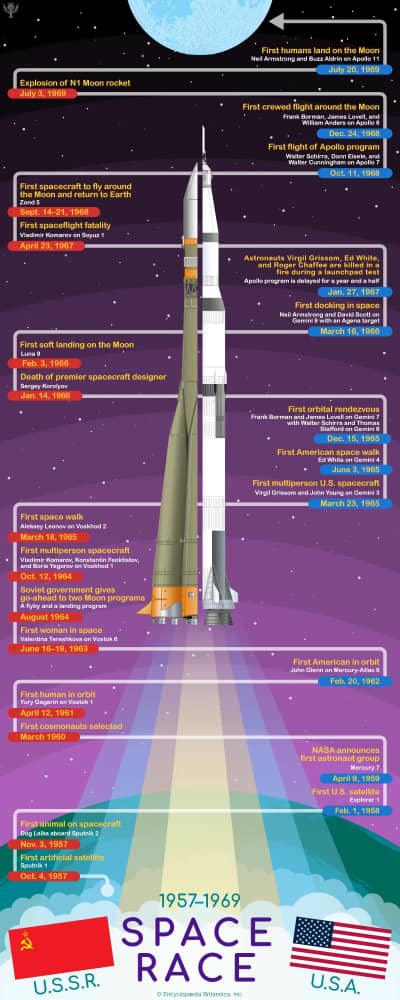
Russia is a great example of this, as technological development has been an essential component of Russia’s pursuit of strategic independence for centuries. As evidenced by the Soviet Union’s advancements in nuclear engineering and space exploration (including the first successful launch of Sputnik in 1957), to current investments in artificial intelligence, Arctic infrastructure, and satellite navigation systems, technology has served as both a symbol of national power and a mechanism for securing strategic autonomy from other competing powers (Graham, 1993; NASA, n.d.) Even after the Soviet Union collapsed, Russia retained significant capabilities in strategic sectors such as nuclear energy, aerospace engineering and military-industrial production.
However, Russia’s current technological trajectory is occurring within a significantly more complicated global setting owing to growing geopolitical rivalries, sanctions regimes, and evolving models of technological competition. Increased restrictions on Russia’s access to advanced semiconductors and global innovation networks have amplified the Russian government’s focus on technological sovereignty and state-led innovation (Connolly, 2018). At the same time, emerging technological competition among major powers, such as the US and China, has transformed the strategic context in which Russia attempts to maintain regional influence. The emergence of these factors raises relevant questions concerning Russia’s long-term standing within Eurasia and the international system as a whole.
Although Russia retains considerable advantages in dual-use technologies, it is unclear whether it will be able to convert its technological capacity into sustainable levels of economic productivity, military effectiveness, and geopolitical influence. Therefore, the interaction between technological development, political governance, economic resilience, and sociocultural dynamics will play a decisive role in shaping its future trajectory.
This research therefore investigates whether technological capacity can provide sufficient support for Russia’s continued status as a regional hegemon in Eurasia by 2035. Utilizing a PEST-informed analytical framework and concepts from realist and techno-nationalist theories, this research examines how Russia’s technological systems interact with the wider political, economic, and social drivers of power. By studying these interdependencies, this research evaluates whether technological sovereignty can become a foundation for enduring regional influence and whether Russia will be able to continue its hegemonic position in Eurasia by 2035, modify it, or decrease it.
Literature Review
This literature review explores the relationship among technological capacity, state sovereignty, and regional hegemony in today’s international system. The literature is based on three interconnected fields of study that include hegemonic power theory in International Relations; techno-nationalism and technological sovereignty studies; and Russia’s past and current innovation models. Collectively, these perspectives create a framework for understanding how technological advancement interacts with political governance, economic sustainability, and geopolitical competition, to shape Russia’s ability to maintain its regional influence in Eurasia.
Hegemony, Power, and Technological Capacity
Recent scholarship emphasizes the concept of technological sovereignty, with the idea that a state can design, control, and use its own technology independently without depending on other external systems (Weiss, 2014). This concept implies that a state’s technological self-sufficiency is an important measure of geopolitical power in today’s world. In particular, with sanctions or export controls there is potential for supply chains and digital infrastructures to be used as weapons against a country. As a result of globalization, countries are becoming technologically dependent on one another, creating both opportunities and risks. Countries reliant on others for supply chains or digital infrastructure will have less leverage if those supply chain providers are subject to political restrictions.
Another way to understand how countries seek technological independence is through the lens of techno-nationalism. Techno-nationalism describes the use of government policy to encourage technological innovation to achieve a nation’s strategic goals (Breznitz, 2007). Government investment in domestic research capability, protection of key sectors of the economy, and coordination of technological development are all ways in which governments attempt to strengthen their national security and economic competitiveness.
In Russia, technological sovereignty is rapidly evolving into a matter of national strategic need. Sanctions were implemented by Western nations against Russia after the annexation of Crimea in 2014 and again in 2022 after Russia’s invasion of Ukraine (Council of the European Union, n.d.), limiting its ability to acquire many Western technologies and engage in international financial transactions. In response to these limitations, the Russian government has emphasized the domestic development of artificial intelligence, microelectronic systems, and digital financial systems to limit technological dependency (Connolly, 2018). This example illustrates the connection between technological development and the broader context of geopolitics and national security.
The State-Centric Model of Technological Innovation in Russia
The contemporary Russian approach to developing its own technological strategy has been influenced by historical factors established during the Soviet regime. To build a strong capability in aerospace engineering, nuclear energy, and military technology, the Soviet Union invested in technology and science through central planning (Graham, 1993). As a result, scientific research became closely related to national security goals, and there was a close relationship between technological development and competition for geopolitical status.
Although the collapse of the Soviet Union had a negative effect on many aspects of the economy, Russia maintained a strong base of technological capabilities in certain critical sectors, especially in nuclear engineering, defense manufacturing, and space technology (Connolly, 2018). However, the broader civilian innovation system did not develop equally well in Russia during the transition from the Soviet Union to modern times.
Modern initiatives such as the GLONASS (Global Navigation Satellite System) represent one of the ways in which Russia seeks to strengthen domestic innovation capacity. GLONASS allows Russia to have its own satellite-based navigation system, thus providing it with independence from other countries’ satellite-based navigation systems. The Skolkovo Innovation Centre is another initiative to promote innovation and entrepreneurship in new areas of research. However, despite these two initiatives, scholars have indicated that Russia’s innovation system still has structural problems, including inadequate private sector funding of innovation and limited opportunities for interaction with global research communities (Connolly, 2018).
Sanctions, Adaptation, and Technological Constraints
The effect of sanctions on innovation and technological development is contested within the literature. Some scholars argue that sanctions can impede technological development by limiting a state’s access to new and sophisticated technologies, international capital, and research networks (Connolly, 2018). Others suggest that external pressures from sanctions can induce domestic innovation through import substitution and government intervention in the industry. While Russia has certainly increased its commitment to achieving technological independence as a result of sanctions imposed upon it, sanctions have also increased Russia’s dependence on domestic production and alternative international partners for semiconductor and digital technologies. Furthermore, analysts warn that sanctions will likely continue to isolate Russia from the global community of innovators and will therefore likely slow down its long-term rate of technological development (Major Issues and Conflicts Facing Russia in the Next Five Years, course material).
Russia in the Emerging Eurasian Order
It is crucial to understand Russia’s technological trajectory as part of an evolving regional geopolitical environment. As China continues to rise as a technological superpower and new economic and transportation corridors have begun to expand across Eurasia, this has changed how power operates regionally. Scholars argue that technology-based cooperative efforts and infrastructure development increasingly function as instruments of regional influence (Ikenberry, 2001). Russia’s investment in exporting nuclear energy, building infrastructure in the Arctic, and developing digital systems are all part of its attempt to utilize technological capability for regional influence. Infrastructure projects can create long-term interdependencies between states by supplying energy, creating logistical transportation systems, and integrating technologies among partners in the project. In a hybrid system of regional blocks and a globally integrated economy, Russia’s degree of influence will depend on maintaining strategic technological capabilities that can shape the structure of Eurasian security and economic networks (Will Regionalism Replace Globalization Definitively? Course Material).
Research Problem
While there have been many scholarly analyses of Russia’s military capabilities, economic stability, and overall geopolitical strategy, few have linked long-term assessments of the sustainability of Russia’s regional hegemony with the development of technological sovereignty. Technological development is frequently analyzed in terms of economics and industry rather than as a structural determinant of geopolitical power. However, in today’s world, technological systems are becoming critical to both military capability and the overall structure of economies. Therefore, technological capacity will likely continue to be an increasingly significant aspect of a state’s autonomous decision-making abilities (strategic autonomy) and the extent to which it exercises state power.
The Russian government’s efforts to develop technological sovereignty, particularly as it is attempting to do so while facing a highly restrictive set of sanctions and competing for influence in the geopolitics of Eurasia, provide a useful framework for analyzing how technological capacity affects long-term geopolitical influence. As the distribution of global power becomes more multipolar, the degree to which states can maintain their technological systems may significantly impact their regional influence and international status. Thus, the central research problem is whether Russia’s technological capacity will enable it to maintain its position as a regional hegemon in Eurasia by 2035. More specifically, this research examines how Russia’s technological development interacts with its political governance, economic resilience, military capability, and ultimately its ability to exercise strategic autonomy and regional influence.
Justification of the Study
The significance of this study can be seen in both its contribution to ongoing debates about the future configuration of power in the world system and to the policy debate regarding the impact that technological competition will have on a state’s ability to exercise geopolitical influence. As technological competition has become a key determinant of geopolitical influence, the ways in which states are able to convert technological capabilities into strategic autonomy is now at the center of International Relations Scholarship. Russia provides a unique opportunity to examine these issues because it is attempting to preserve its hegemonic status in the region despite being subject to economic sanctions, technological limitations, and shifting global alliances. Therefore, by examining Russia’s efforts to achieve technological sovereignty, we gain insights into how middle and major powers are adapting to an emerging multipolar technological order. Additionally, our research findings will contribute to the broader debates surrounding the evolving nature of technological power, strategic autonomy, and the evolving factors that determine regional hegemony in the 21st century.
Research Questions
Guided by the PEST analytical framework and the theoretical approaches previously outlined, this study is structured around three primary research questions:
1. How will Russia’s space and satellite infrastructure affect its economic and military autonomy by 2035?
2. Which technologies (AI, cyber, space, nuclear, Arctic infrastructure) will determine Russia’s strategic competitiveness by 2035?
3. Can Russia maintain technological sovereignty under sanctions and limited access to global innovation systems?
Theoretical Framework
This study integrates the realist theory of power with the concepts of techno-nationalism and state-centered innovation to analyze Russia’s hegemonic trajectory toward 2035. Each of these theories allows us to understand technological development as a structural element of geopolitical power rather than simply a factor of economics.
Realist theory provides the primary lens for understanding Russia’s strategic behavior. States pursue power within an anarchic international system to ensure their survival and security (Waltz, 1979). As stated by Mearsheimer (2001), great powers pursue regional hegemony to ensure that they do not have any rival power in their strategic environment. Russia’s efforts to maintain its military capability, energy influence, and geopolitical alliances in Eurasia reflect this broader logic of regional power preservation. Technological sovereignty is an extension of the realist imperative. Control of critical technologies can enhance a state’s military capabilities, improve its economic resilience, and reduce its vulnerability to external coercion. Artificial Intelligence, satellite infrastructure, cyber systems, and energy technologies are examples of technologies that are becoming key elements of modern state power.
Techno-nationalism provides an additional explanation of how states pursue technological independence through policy actions. States can coordinate their innovation systems, support domestic industries, and protect strategic technologies to create competitive advantages for themselves (Breznitz, 2007). Examples of this approach include Russia’s focus on developing artificial intelligence, producing microelectronics domestically, and creating domestic satellite navigation systems. Each of these theories enables the concept of technology as a multiplier of power. A state’s technological capacity determines its military deterrent capability, contributes to its economic resilience, and provides the means to engage in infrastructure diplomacy that generates long-term dependency from neighboring regions. Thus, Russia’s success or failure in converting its technological investments into sustained regional influence will determine whether Russia remains hegemonically dominant in Eurasia by 2035.
Research Design and Methodology
This research utilizes a qualitative strategic foresight design to examine the relationship between technological development and Russia’s potential hegemonic position in Eurasia. A qualitative approach is utilized because of the complex interactions between technological innovation, political governance, economic resilience, and geopolitical strategy, which cannot be entirely captured through quantitative indicators alone.
Data Collection and Analysis
This research relies primarily on secondary data sources. These include: academic literature related to international relations theory, technological sovereignty, and innovation systems, which provide the theoretical framework for the study. Policy reports and institutional analyses from organizations such as the Center for Security and Emerging Technology (CSET), the Center for a New American Security (CNAS), and other strategic research institutions are used to assess Russia’s technological policies and geopolitical positioning. Sectoral analysis of key industries, such as artificial intelligence, space infrastructure, nuclear energy systems, and arctic logistics, provides insight into technological capabilities and structural constraints shaping Russia’s innovation ecosystem. Reputable international media and strategic analysis publications such as specialized security research outlets are utilized to track recent technological developments and policy initiatives.
In addition, course materials provided within the module, including lecture content, analytical videos on Eurasian geopolitics, and the Munich Security Conference were consulted to support the interpretation of geopolitical trends and technological competition among major powers. The analysis triangulates the data through qualitative comparative assessment and strategic foresight methods. Technological developments are examined in relation to political, economic, and geopolitical dynamics to identify the structural drivers shaping Russia’s technological capacity. Forecasting techniques are then utilized to evaluate plausible trajectories for Russia’s regional influence by 2035.
Sample Population (Units of Analysis)
Because this study relies on secondary data analysis rather than primary data methodologies. The sample population refers to the units of analysis used to evaluate Russia’s multi-sectoral trajectory and its implications for regional hegemony. These are the selected, and relevant contents that serve as windows for researchers to have adequate grasp of lived experiences of Russians and the Russian state. Finally, the study also includes comparative technological powers, including the US, China, and the EU, as they serve as a reference point for measuring Russia’s technological capabilities and relative position within the global innovation system.
Analysis: Technological innovation as a structural driver of Russian hegemony in Eurasia by 2035
Building on the literature review and drawing on triangulated evidence from multiple sources, this section examines how technological capacity shapes Russia’s ability to sustain regional hegemonic influence in Eurasia by directly addressing the study’s three research questions. In today’s world, technology is a major driving force for a state’s sovereignty, security, economic stability, and ability to exert geopolitical influence. Since the early beginnings of technology in Russia, there has been a direct relationship between state power and technological advancements (Graham, 1993), which continues to influence how Russia utilizes its key technological infrastructures, such as space, artificial intelligence, nuclear energy, and Arctic Systems. These technologies are also key components in determining whether Russia can maintain hegemony in Eurasia through 2035, while under continued pressure from sanctions, disruption to its supply chain, and the increasing shifts in the balance of global power.
a.) Space and Satellite infrastructure as a foundation of economic and military autonomy
Space and satellite technology continues to be an important part of maintaining Russia’s economic and military autonomy. The satellite systems provide Russian military and civilian institutions with the necessary positioning, navigation, communication, reconnaissance and early warning capabilities essential for modern warfare and economic coordination. As such, Russia’s Global Navigation Satellite System (GLONASS) is a tool for strategic autonomy in addition to being a technical platform. It provides Russian military forces with precise target acquisition, command and control integration and secure navigation on all military platforms. Economically, satellite infrastructure supports telecommunications, logistical coordination and digital connections across Russia’s vast territory. In addition, in the Arctic, satellite based surveillance and navigation support Russia’s operational capability to operate along the Northern Sea Route where land-based infrastructure is still limited (World Nuclear News, 2025).
However, sustaining this autonomy requires continuous modernization and reliable launch capacity. The sanctions and export restrictions have reduced Russia’s access to high-end aerospace parts, thereby increasing its reliance on indigenous manufacturing and alternate supply chain sources. The US’s GPS and China’s BeiDou systems which are similar technologies are both backed by large-scale semiconductor and aerospace industries, which highly contributes to their hegemony. However, Russia operates within more constrained technological ecosystems, and its strategic autonomy in 2035 will therefore depend more whether the space and satellite infrastructure remains technologically competitive and operationally reliable.
b.) Technologies shaping Russia’s strategic competitiveness
The technological competitiveness of Russia through 2035 will be influenced by several interacting sectors; artificial intelligence, cyber capabilities, microelectronic components, nuclear energy and Arctic infrastructure.
Artificial Intelligence and cyber capabilities are a priority for Russia’s National AI Strategy, which ties technological development to military modernization and governance efficiency (CSET, 2019; CNAS, 2024). AI used in military contexts improves unmanned aerial vehicle (UAV) operations, robotics, targeting analytics, and decision-support systems, and improves administrative efficiency and data management in government and other public institutions. The Russian regulatory approach emphasizes government oversight and information sovereignty over precautionary regulations (Library of Congress, 2026; Kaspersky, 2025). Regardless of how the regulatory environment shapes AI development, AI development depends on computing infrastructure and access to microelectronic components. Investments in Russia’s domestic cloud computing infrastructure indicate that the processing capacity for data is a critical strategic resource (Reuters, 2025).
Microelectronics represent the most significant technological constraint on Russia’s innovation system. Semiconductors are the most important microelectronic components in modern technological applications. They are the basis of AI systems, telecommunications, aerospace technologies, and modern weapons platforms, and the sanctions on Russia, that limited its access to advanced semiconductor chips and manufacturing equipment, have created additional pressure to develop domestic semiconductor initiatives (Reuters, 2026). Semiconductor production is capital-intensive and highly dependent on complex global supply chain systems; therefore, Russia’s ability to increase domestic semiconductor production will greatly influence whether technological development can move from the security sector together areas of economic modernization.
Nuclear technology remains one of Russia’s most durable technological strengths, built on the foundation laid during the Soviet era (EBSCO, n.d.). Russia’s export of nuclear technology creates long-lasting technological relationships between Russia and exporting partners in terms of fuel supply, training, and maintenance of nuclear infrastructure (World Nuclear News, 2024). These types of long-lasting technological relationships result in years of dependency on Russia for both the operation of the reactor and the provision of nuclear fuel (World Nuclear News, 2024). The existence of these types of dependencies provides Russia with a long-term influence on the technological modernization of exporting partner countries, even in the event of a long-term geopolitical conflict.
Russia’s Arctic strategy includes the use of icebreaker fleets, development of ports, satellite-based monitoring systems, and navigation systems to meet the operational needs of Russia’s forces operating along the Northern Sea Route. While the long-term viability of the Northern Sea Route for commercial shipping remains unknown, Arctic infrastructure provides Russia with increased control over its territory and military presence in the region (World Nuclear News, 2025). With the changes in climate that are currently occurring, Arctic infrastructure could potentially provide Russia with enhanced strategic positioning in future Arctic geopolitics as the Northern Sea Route becomes a viable alternative for international trade routes.
c.) Technological sovereignty under sanctions
Russia’s ability to support technological sovereignty, even with sanctions, depends on its capacity to maintain relative autonomy rather than complete independence. Restrictions imposed by sanctions limit Russia’s access to advanced technology, international research networks, and world financial markets. Therefore, the focus of policy has been on substituting imports for domestically developed innovation (CNAS, 2024; Connolly, 2018).
Three structural factors have a significant impact on Russia’s technological sovereignty by 2035: First, the development of domestic microelectronic capacity could help reduce the supply chain vulnerability and enable Russia to develop its technological innovation (Graham, 1993). Second, the stability of Russia’s human capital base, especially in STEM fields and research institutions, will determine its long-term innovation potential (Graham, 1993). Third, technological partnership arrangements with countries such as China may help Russia overcome many restrictions; however, they may also result in asymmetrical dependency in emerging innovation systems.
Therefore, Russia’s technological sovereignty is likely to remain uneven. While Russia has strong capabilities in sectors that are critical to its sovereignty such as space infrastructure, nuclear engineering, and cyber operations, it is anticipated that its limited autonomy will be areas that are considered to be enabling technologies.
2035 Projection: Russia’s Hegemonic Trajectory in Eurasia
The preceding analysis has shown that the sustainability of Russia’s hegemony in Eurasia is contingent upon the interaction of the four variables identified earlier: technological capacity, political governance, economic resilience and regional geopolitics. Technological capacity can serve as a multiplier of power, but only if technology creates the conditions for sustainable military capabilities, economic resilience, and long-lasting regional influence.
From a realist viewpoint, regional hegemony requires the ability to dominate one’s immediate geopolitical environment while deterring external interference (Mearsheimer, 2001). For Russia to achieve hegemony in Eurasia, it must have credible military capabilities, energy leverage, and technological autonomy to protect itself from technological dependency on rival technological systems. In a world where the competition between the US and China shapes the global technological landscape, Russia’s strategy leans more on maintaining its sovereignty within the strategic dual use sectors that are critical to sustaining its regional influence as an alternative to being part of the larger US and Chinese innovation ecosystems.
Therefore, by 2035, Russia’s technological trajectory points towards conditional regional hegemony. Russia is expected to retain strong capabilities including space infrastructure, nuclear energy systems, cyber capabilities and Arctic operational technologies. These sectors remain closely integrated with national security institutions and benefit from the sustained state investment. As such, satellite autonomy via strengthened systems will likely continue to provide Russia’s military with strategic independence even under sanctions.
Russia’s nuclear energy export projects are also likely to expand its influence in the region. Long-term technological partnerships among reactor project partners are created through nuclear fuel supplies, maintenance and regulatory cooperation resulting in interdependence between Russia and partner states. Similarly, the construction of Arctic-related infrastructure (such as icebreakers, ports, monitoring systems and navigation networks) is increasing Russia’s strategic position across Northern Sea routes and strengthening its claim to territory in the face of climate change and other forms of geopolitical competition.
However, there are structural limitations to Russia’s technological growth. The greatest limitation is the microelectronic bottleneck. High-end semiconductors are necessary for advanced AI systems, telecommunications infrastructure, aerospace technologies, and modern weapons systems. Restrictions imposed by sanctions on Russia’s access to high-end chip manufacturing equipment and chip design may limit Russia’s ability to advance in multiple technological areas. Although possible alternatives to the Western microelectronics sector include partnership arrangements and domestic chip manufacturing, achieving complete microelectronics independence is unlikely in the short-to medium-term.
Another factor affecting Russia’s technological growth is its human capital. Russia has traditionally had a strong foundation in the education of mathematicians, physicists, and engineers; however, demographically and due to migration pressures, Russia may experience challenges in sustaining the long-term viability of its technological workforce. An innovation ecosystem requires stable research institutions, a steady flow of talent, and consistent investment in the advancement of science.
Overall, based on these considerations, the most probable scenario for Russian hegemonic influence by 2035 is that it will achieve conditional hegemony. Russia is likely to be the dominant security actor over much of Eurasia, and have sufficient ability to exercise its influence through the leverage of energy and technological specialization. Nevertheless, the scale of Russia’s total innovation ecosystem is unlikely to match that of the US or China.
In summary, the projected trajectory toward 2035 is of structured uncertainty as part of an emerging multipolar technological environment. If Russia is able to alleviate at least some of the microelectronic limitations that currently exist, maintain its relative human capital base, and continue to grow in strategically significant areas, it should be capable of maintaining its status as a regional hegemon in Eurasia. Under the opposite conditions (i.e., if the structural barriers confronting Russia become even greater), Russia is likely to retain its influence, but will likely do so in the context of increasingly asymmetrical technological partnership arrangements.
Conclusion
This study explored whether technology can sustain Russia’s status as a regional hegemon in Eurasia by 2035. The analysis demonstrates that technological development has evolved as a critical element of geopolitical capabilities, influencing both military capabilities and the economic and strategic independence of a state. Russia possesses considerable technical and technological advantages, as outlined above, but structural limitations hinder the potential for greater dissemination of technological progress throughout the Russian economy. Consequently, the long-term viability of Russia’s future hegemonic position will be contingent upon its ability to maintain sufficient technological independence to allow for the continued exercise of regional dominance. In summary, the most likely scenario for Russia by 2035 is one of conditional regional hegemony, whereby Russia continues to play a major role in Eurasian geopolitics but adjusts to the structural limitations imposed by the increasing multipolarity of the technological order. As technological competition increasingly shapes the global balance of power, Russia’s ability to sustain technological sovereignty will remain central to its long-term strategic position within the Eurasian regional order.
References
Bank of Russia. (2023). Digital rubble project and financial technology strategy. . Central Bank of Russia. https://www.cbr.ru/eng/press/event/?id=16993
Breznitz, D. (2007). Innovation and the state: Political choice and strategies for growth in Israel, Taiwan, and Ireland. Yale University Press. https://doi.org/10.1086/597436
Center for a New American Security (CNAS). (2024). Military Artificial Intelligence, the People’s Liberation Army, and US-China Strategic Competition. CNAS. https://www.cnas.org/publications/congressional-testimony/military-artificial-intelligence-the-peoples-liberation-army-and-u-s-china-strategic-competition
Center for a New American Security (CNAS). (2024). The role of AI in Russia’s confrontation with the West. https://www.cnas.org/publications/reports/the-role-of-ai-in-russias-confrontation-with-the-west
Center for Security and Emerging Technology (CSET). (2019). Thoughts on Russia’s AI Strategy. CSET. https://cset.georgetown.edu/article/thoughts-on-russias-ai-strategy/
Center for Security and Emerging Technology (CSET). (2019). Decree of the President of the Russian Federation on the Development of Artificial Intelligence in the Russian Federation. https://cset.georgetown.edu/wp-content/uploads/Decree-of-the-President-of-the-Russian-Federation-on-the-Development-of-Artificial-Intelligence-in-the-Russian-Federation-.pdf
Connolly, R. (2018). Russia’s response to sanctions: How Western economic statecraft is reshaping political economy in Russia. Cambridge University Press. https://doi.org/10.1017/9781108227346
Council of the European Union. (n.d.). EU sanctions against Russia. https://www.consilium.europa.eu/en/policies/sanctions-against-russia/
European Space Agency. (2018). GLONASS general introduction. Navipedia. https://gssc.esa.int/navipedia/index.php/GLONASS_General_Introduction
EBSCO Information Services. (n.d.). Russia’s natural resources. EBSCO Research Starters. https://www.ebsco.com/research-starters/environmental-sciences/russias-natural-resources
Forecast International. (2024). Global navigation satellite systems: A modern necessity – A look at the world’s leading PNT constellations. https://flightplan.forecastinternational.com/2024/09/25/global-navigation-satellite-systems-a-modern-necessity-a-look-at-the-worlds-leading-pnt-constellations/
Graham, L. R. (1993). Science in Russia and the Soviet Union: A short history. Cambridge University Press. https://assets.cambridge.org/97805212/87890/index/9780521287890_index.pdf
Ignatov, A., & Kerimi, D. (2025). Russia’s securitised approach to AI sovereignty. The African Journal of Information and Communication (AJIC), 35, 1–11. https://doi.org/10.23962/ajic.i35.20626
Ikenberry, G. J. (2001). After victory: Institutions, strategic restraint, and the rebuilding of order after major wars. Princeton University Press. https://press.princeton.edu/books/hardcover/9780691192840/after-victory?srsltid=AfmBOor1TBalE__X4nRCW71zab_SOwn6w1SKncmU5kpqVkmp7E_9Fnns
Kaspersky. (2025). AI regulation in Russia. https://ai-cert.kaspersky.com/ai-regulation-ru.html
Library of Congress. (2026). Russian Federation: Government identifies areas for use of AI in public administration. Global Legal Monitor. https://www.loc.gov/item/global-legal-monitor/2026-01-02/russian-federation-government-identifies-areas-for-use-of-ai-in-public-administration/
Major issues and conflicts facing Russia in the next five years. (Course material). IR505 Relations and Diplomacy Workshop.
Mearsheimer, J. J. (2001). The tragedy of great power politics. W. W. Norton & Company.https://wwnorton.com/books/9780393349276
NASA. (n.d.). Sputnik and the dawn of the Space Age. National Aeronautics and Space Administration. https://www.nasa.gov/history/sputnik/sputorig.html
Reuters. (2025). Russian billionaire Potanin acquires minority stake in cloud provider Selectel. Reuters. https://www.reuters.com/business/russian-billionaire-potanin-acquires-minority-stake-cloud-provider-selectel-2025-12-29/#:~:text=MOSCOW%2C%20Dec%2029%20(Reuters),home%2Dgrown%20artificial%20intelligence%20models.
Reuters. (2026). Russia’s Sberbank takes stake in Element as Putin pushes tech sovereignty. Reuters. https://www.reuters.com/business/finance/russias-sberbank-takes-stake-element-putin-pushes-tech-sovereignty-2026-01-23/
Waltz, K. N. (1979). Theory of international politics. McGraw-Hill. http://slantchev.ucsd.edu/courses/ps240/03%20Anarchy,%20Hierarchy,%20and%20Sovereignty/Waltz%20-%20Theory%20of%20International%20Politics%20(Ch%205-8).pdf
Weiss, L. (2014). America Inc.? Innovation and Enterprise in the National Security State. Ithaca, NY: Cornell University Press. https://doi.org/10.7591/9780801471131
Will regionalism replace globalization definitively? (Course material). IR505 Relations and Diplomacy Workshop.
World Nuclear News. (2024). Russia’s draft energy plan sets out new nuclear expansion. World Nuclear News. https://www.world-nuclear-news.org/articles/russia-s-plans-for-11-new-nuclear-reactor-plants
World Nuclear News. (2025). Northern Sea Route cargo set new record in 2024. https://www.world-nuclear-news.org/articles/northern-sea-route-cargo-set-new-record-in-2024